Thatch Roof Repairs in Cape Town
Leaks, slipped ridges, storm damage and worn valleys: repaired properly by Cape reed thatchers. Free inspection anywhere in greater Cape Town, with photos of the actual fault and a written quote.
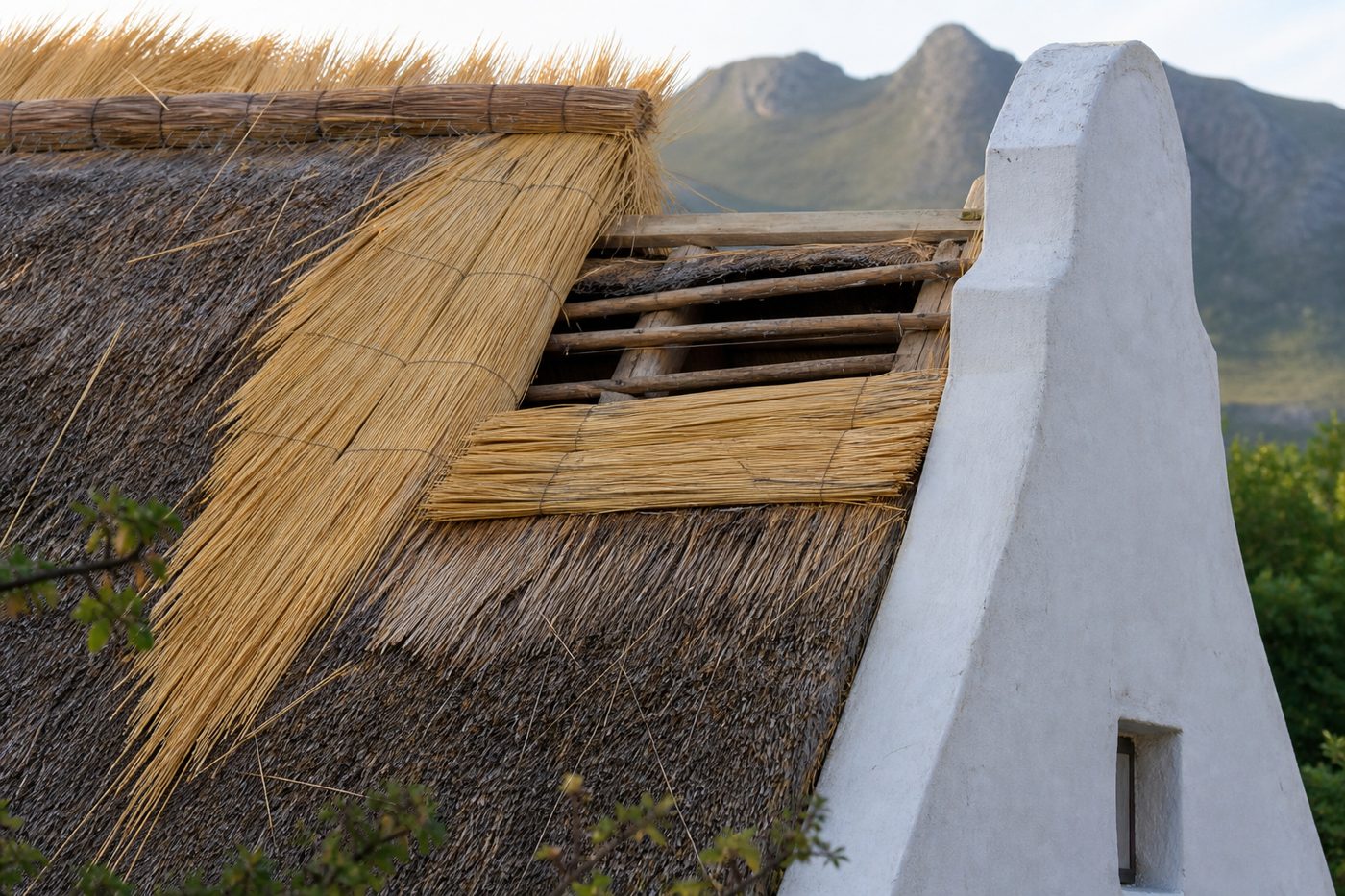
A thatch roof warns you before it fails
A damp patch on the ceiling after a hard north-wester. A scatter of loose reed on the paving. A ridge that suddenly looks tired and dark. Catch those signs early and a repair is usually an afternoon on a ladder. Leave them and the damage works its way into the battens underneath.
We find the actual cause: usually pitch, ridging or a thin patch: and fix that, rather than smearing sealant over it.
The thatch repairs we do most often
Most call-outs across the Cape fall into a handful of jobs. None of them are exotic: the skill is in spotting which one you actually have.
Ridge repairs and rebuilds
The ridge takes the wind and holds the fixings, so it is nearly always the first thing to go. A tired ridge re-capped in time saves the slopes underneath it.
Patching thin or storm-torn slopes
A gale can lift a section of reed or a falling branch can gouge it. We dress in new Cape reed to match the surrounding thickness: not a thin cosmetic layer.
Valley and flashing repairs
Where two roof planes meet, or where thatch runs up against a wall or chimney, is where most leaks actually begin.
Leak tracing
The wet patch on your ceiling is rarely right under the hole. Water runs along the reed and battens before it drips, so finding the real entry point is half the job.
Re-combing and cleaning
Brushing the roof back to a clean, water-shedding surface and clearing moss buys years on a roof that is otherwise sound.
Bird-proofing and vermin exclusion
Wire netting and targeted exclusion work where birds or rodents have started nesting in the reed.
Is it a repair or a re-thatch?
This is the question worth answering before you spend anything. Localised damage: one ridge, one valley, a torn patch: is genuinely repairable and buys real years.
Thinning across whole slopes, with the fixing wire starting to show, is not. Patching that just moves the leak along. If you are not sure which one you have, an inspection settles it: and we will say so if a repair is not the right call.
Get a free inspection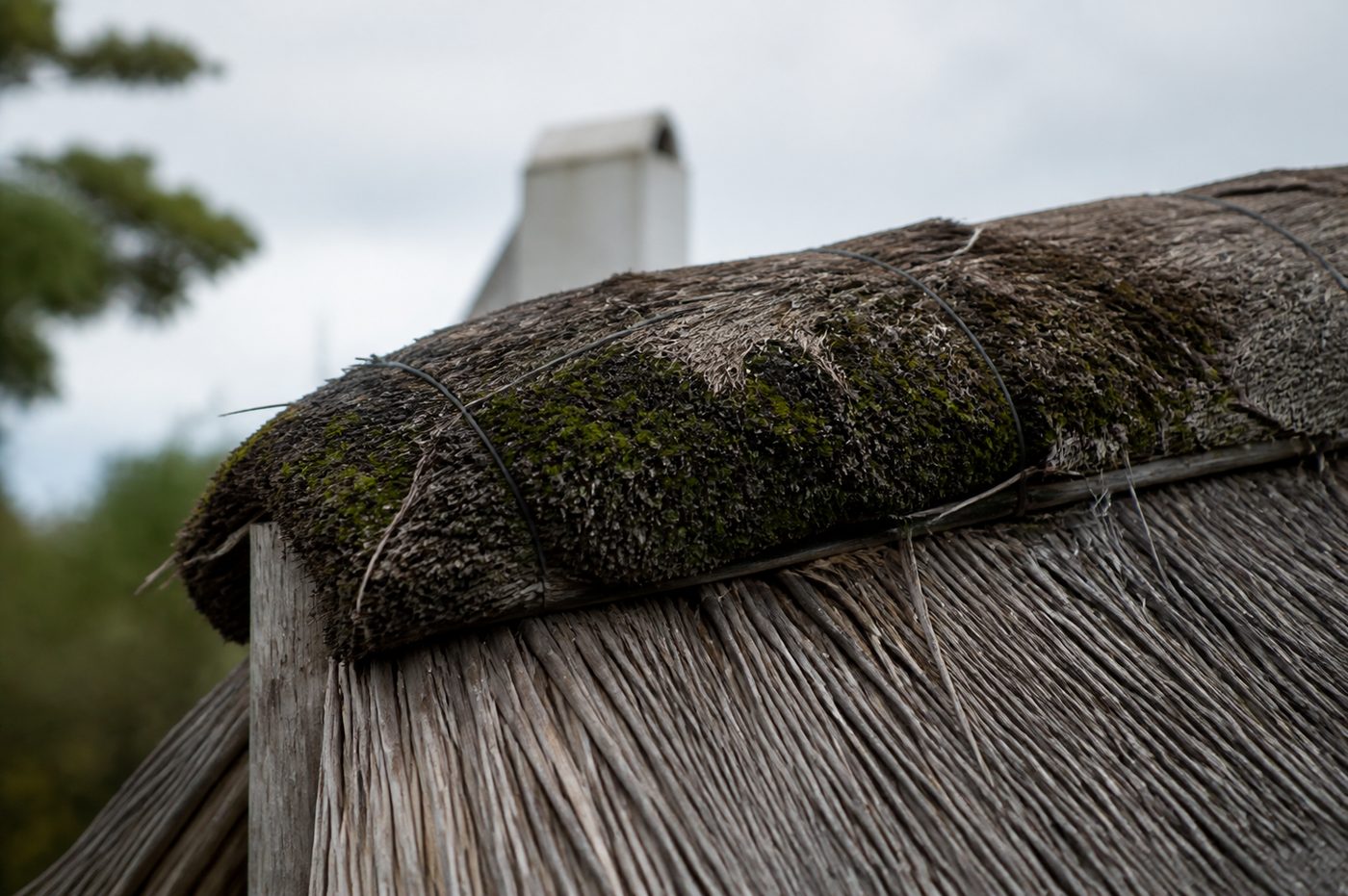
Why Cape Town roofs fail where they do
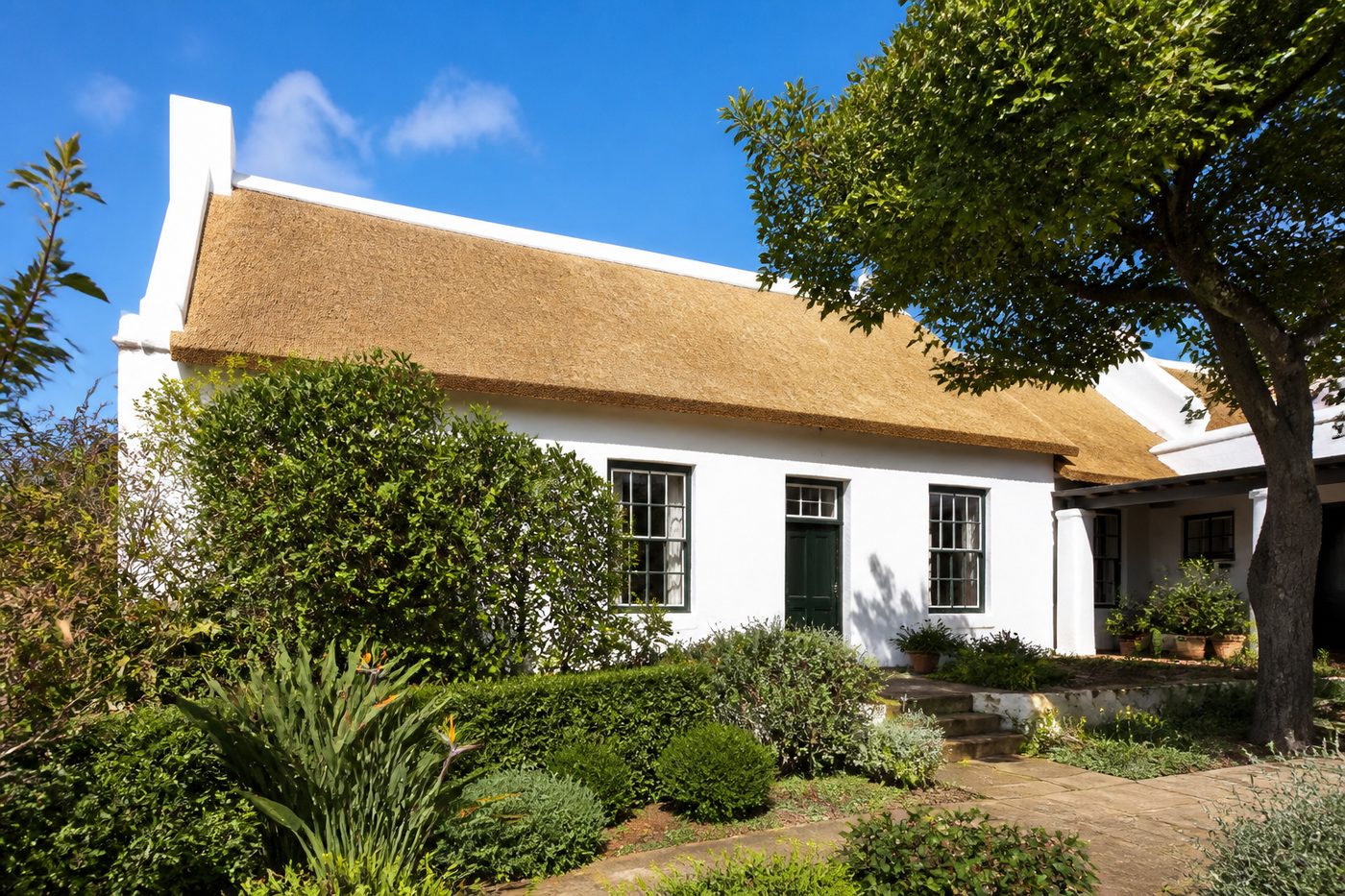
Our weather is not one weather. On the Atlantic side: Kommetjie, Blouberg, Melkbos: salt air and the summer south-easter scour the exposed slope and drive winter rain into it, so one face always ages faster than the rest.
Under the oaks in Constantia or Newlands the problem flips: shade and leaf litter hold moisture, moss takes hold, and the roof stays damp long after the rain has stopped. Knowing which pattern you are dealing with is what makes a repair last.
What a proper repair should include
Thatch repair questions Cape Town owners ask
How do I know if I need a repair or a full re-thatch?
Localised damage: one ridge, one valley, a torn patch: is genuinely repairable and buys real years. Thinning across whole slopes, with the fixing wire starting to show, is not; patching that just moves the leak along. If you are not sure, we will tell you straight after an inspection.
What are the most common thatch roof repairs?
Ridge repairs and rebuilds, patching thin or storm-torn slopes, valley and flashing repairs, leak tracing, and re-combing and cleaning. The ridge takes the wind and holds the fixings, so it is nearly always the first thing to go.
Why is the wet patch on my ceiling not under the hole?
Water runs along the reed and battens before it drips, so the entry point is rarely directly above the damp mark. Tracing the real source is half the job: which is why a proper inspection matters more than a quick patch.
What affects the price of a thatch roof repair?
Access, pitch and height move the price most. A single-storey lapa reachable off a ladder is quick; a steep double-storey roof over a pool needs scaffolding and time, and that shows up in the quote. Always get the number in writing and ask exactly what is included.
Do you inspect the roof before quoting?
Yes. Every job starts with a free site visit anywhere in greater Cape Town. You get photos of the actual fault: not a guess from the ground: and a written quote that says what is covered.
Why do Cape Town thatch roofs fail where they do?
On the Atlantic side: Kommetjie, Blouberg, Melkbos: salt air and the summer south-easter scour the exposed slope and drive winter rain into it, so one face ages faster. Under the oaks in Constantia or Newlands the problem flips: shade and leaf litter hold moisture and grow moss.
Want a straight answer on your own roof?
Free inspections across Cape Town and the Winelands. We’ll give you the number, the photos and the options: no pressure to book anything.