A thatch roof leak almost never starts where the water lands. Thatch sheds water down the stems, so a fault at the ridge can appear as a damp patch three metres downslope. That single fact explains why so many thatch leaks get chased in the wrong place and patched twice.
How a thatch roof is supposed to keep water out
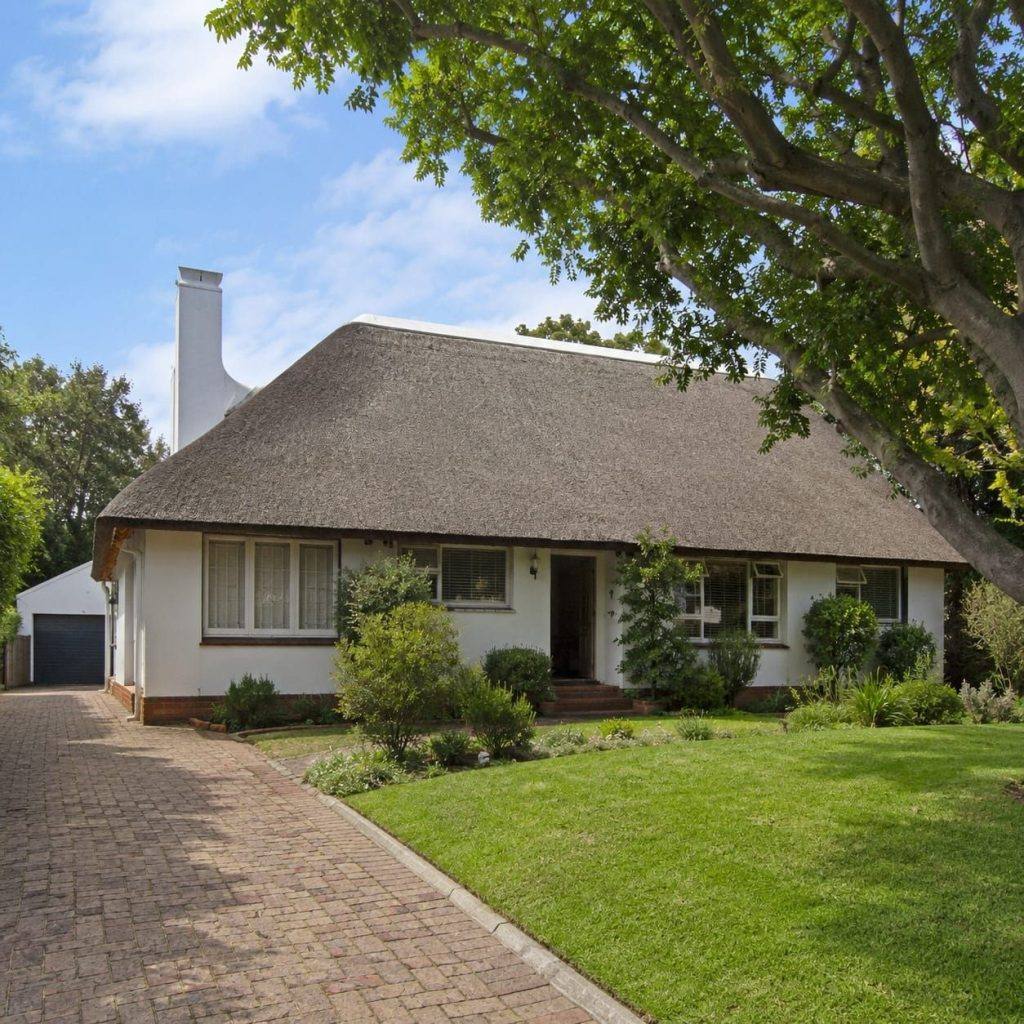
Thatch is not waterproof in the way a tile or a membrane is. It works by density and angle. Reed or grass is packed tightly and laid at a steep pitch, so water runs down the outside of the stems and off the eaves before it can travel inward. Only the top few centimetres ever get wet in normal rain.
That means every leak has the same root cause: something stopped water running off and let it run in instead. Pitch, density or a detail.
The common causes of a thatch roof leak
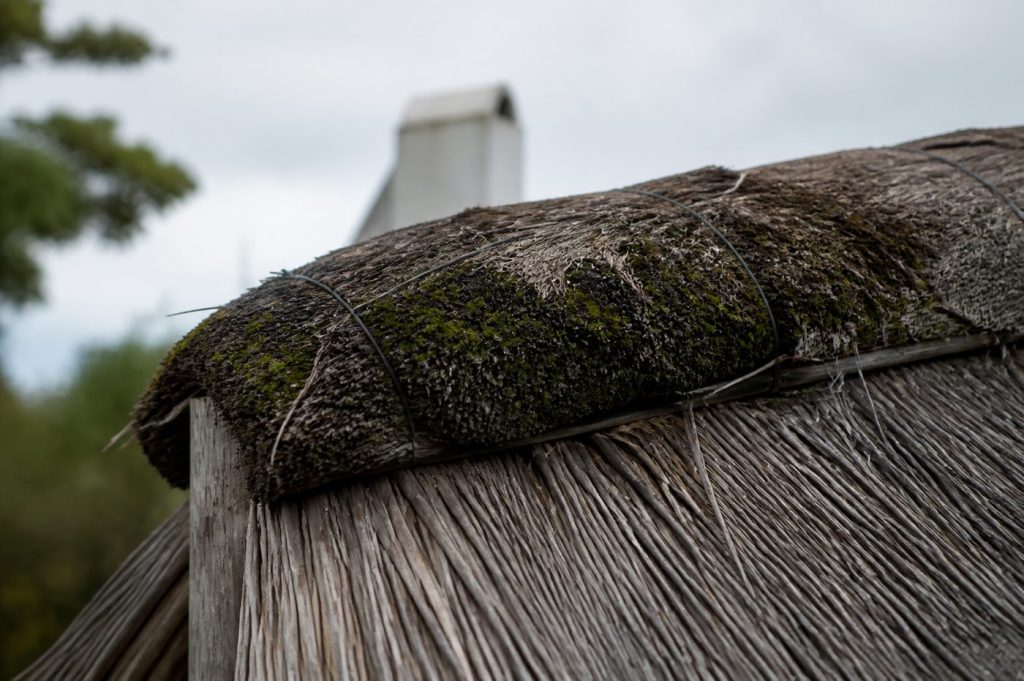
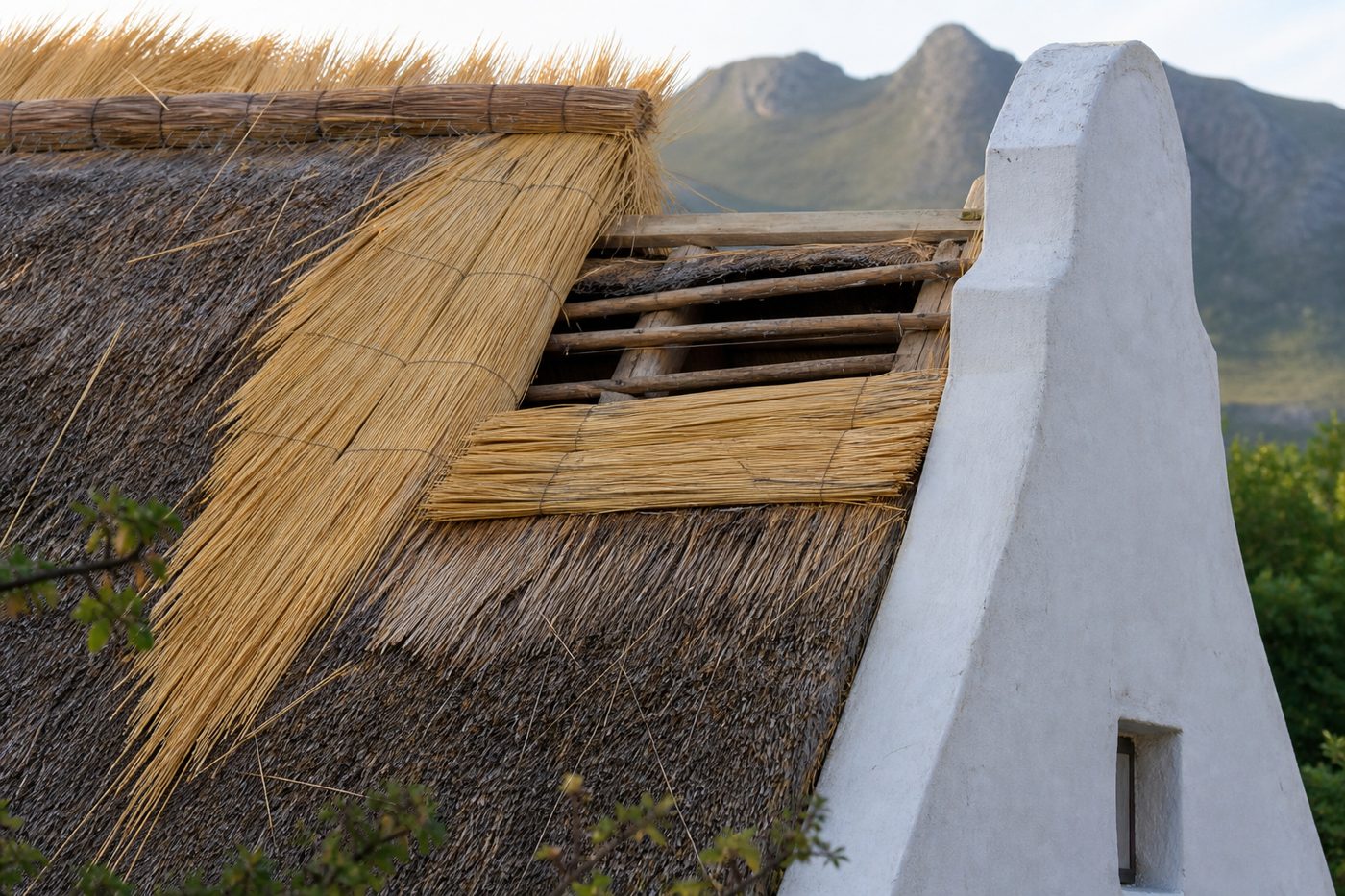
A worn or failed ridge. The ridge takes the most weather and is the most common leak point on a Cape Town roof. Ridges need replacing several times over the life of the thatch beneath them.
Thin patches on the slope. Thatch loses thickness slowly. Once the body is thin enough, water reaches the fixing wire and travels along it. This shows as several damp spots in different rooms after every front, which is a sign the body of the thatch is going, not a single fault.
Valleys and junctions. Where two roof planes meet, water concentrates. Poor valley detailing is one of the few genuine construction faults we still find on newer roofs.
Penetrations. Chimneys, skylights, satellite brackets and extractor vents all break the water path. Anything fitted through thatch after the roof was built is worth inspecting first.
Pitch that is too shallow. Below about 45 degrees, thatch stops shedding properly. This is a design fault and it cannot be patched away. See our guide on thatch roof pitch.
Moss and organic growth. Moss holds water against the thatch on the shaded slope and keeps it wet long after the rain stops.
Finding the actual source
Start above the damp patch and work up the slope, not around it. Check the ridge first, then any penetration uphill of the stain, then the valleys, then the body of the thatch for thinning. Inside, look along the fixing wires with a torch, because water travels along steel.
Do not walk on a thatch roof to investigate. You will compress the thatch, break the water path and create the next leak. Inspection happens from a ladder at the eaves and from inside the roof space.
What thatch leak repairs cost
A localised repair, one ridge section or one valley, is a small job. A ridge replacement across a whole roof is a bigger one. Full re-thatching generally runs R200 to R400 per square metre in South Africa, so the question that decides your bill is whether the thatch body still has life in it.
The honest test is thickness and density, not age. We put a probe into the thatch in several places. If the body is sound and the fault is at the ridge or a junction, repair it. If the body is thin across whole slopes, patching is money spent twice. Our thatch roof repair cost guide has the detail, and seven signs your thatch roof needs re-thatching covers the tipping point.
What not to do
Do not spray a sealer on it. Coating thatch traps moisture inside the material and accelerates the rot you were trying to stop. We explain why in our honest guide to thatch roof sealers.
Do not patch a leak with cement or bitumen. Do not add a plastic sheet under the thatch. All three trap water.
Stopping the next one
Most thatch leaks are preventable and cheap to prevent. Keep the ridge maintained, clear moss off the shaded slope, cut back overhanging branches, and get the roof inspected twice a year. Our year-round maintenance guide sets out what to check and when.
If your roof is leaking now, get it looked at before the next front rather than after. Water that has already reached the timber turns a thatch job into a structural one.
What we do on a leak call-out
We inspect from ladders at the eaves and from inside the roof space, never by walking the thatch. We probe the thatch on every slope for thickness and density, trace the water path upslope from the internal stain, and check every junction and penetration above it.
You get a written finding with photographs, a clear statement of whether this is a repair or the start of a re-thatch, and a quote for the work. If we think patching is throwing money away, we say so. Our guides on thatch roof leaks and thatch roof inspections explain what we look at.
Frequently asked questions
Can rain leak through a thatched roof?
Not through sound thatch. Thatch sheds water down the stems at a steep pitch and only the top few centimetres get wet. Rain gets in when the ridge fails, the body thins, a junction is badly detailed or the pitch is too shallow.
What to do about a leak in a thatched roof?
Trace it from above the damp patch upslope, not around it, because water travels down the stems and along fixing wires. Get it inspected from a ladder rather than walking on the roof, which causes further damage.
Why is my thatch roof leaking in several places?
Multiple damp spots after every rain usually mean the body of the thatch has thinned rather than one fault having appeared. That is a re-thatching signal, not a patching one.
Should I seal a leaking thatch roof?
No. Sealers and waterproofing sprays trap moisture inside the thatch and speed up rot. Fix the ridge, the density or the detail that is letting water in.
Want a straight answer on your own roof?
Free inspections across Cape Town and the Winelands. We’ll give you the number, the photos and the options: no pressure to book anything.