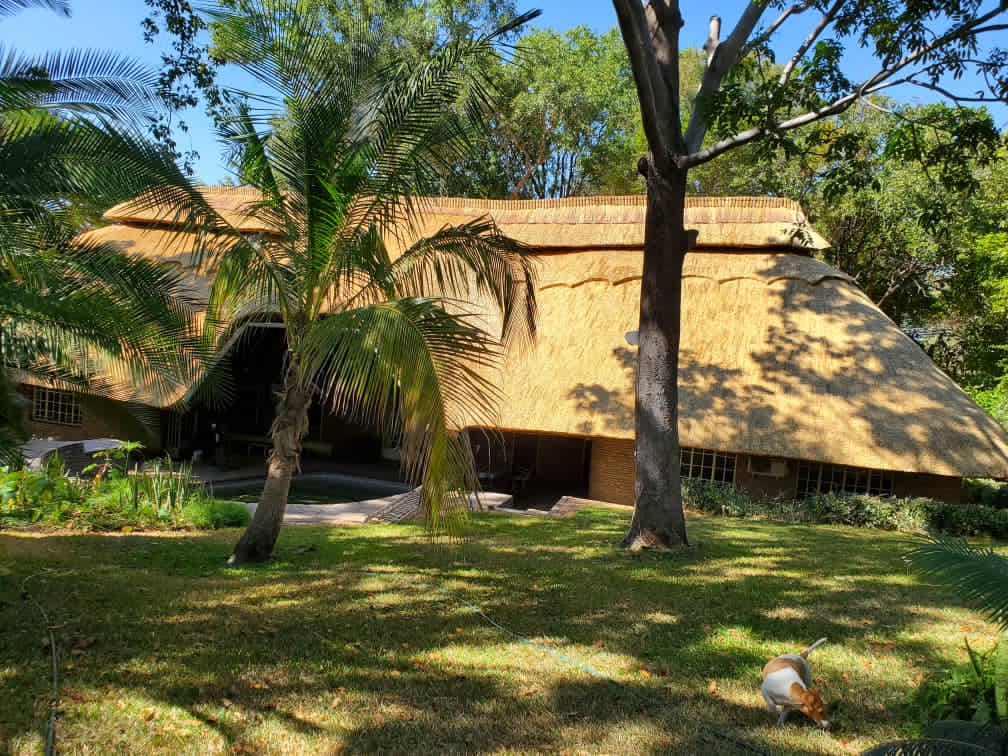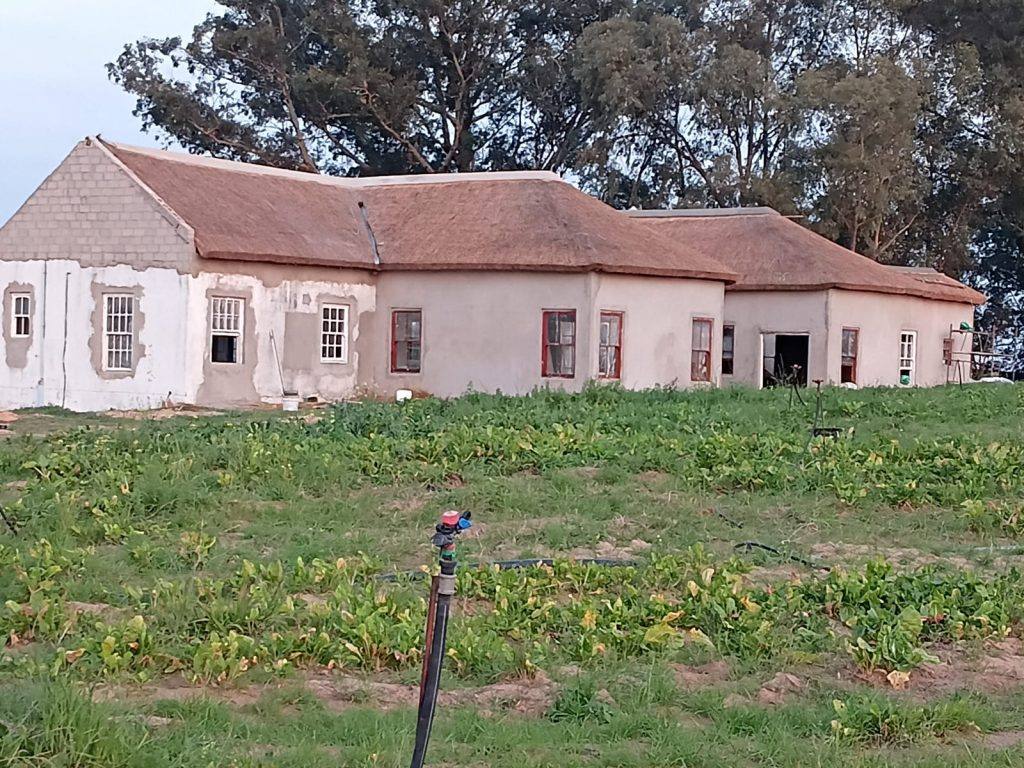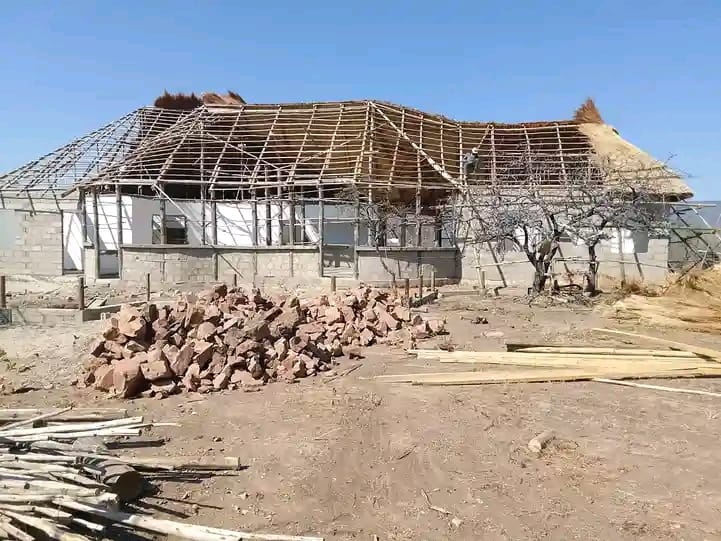
The re-thatching process is less mysterious than most owners expect, and knowing the sequence helps you judge whether the crew on your roof is doing it properly. It is also the point at which any hidden structural problem finally becomes visible, which is why the middle of the job is where budgets move.
The re-thatching process before anything comes off
A proper re-thatch starts with an assessment: measuring the roof area and pitch, probing the existing thatch for depth and soundness, and looking at the structure from inside. This determines whether you need a full strip and re-thatch or whether an over-thatch is viable.
The quote should name the material and grade, the thickness to be laid, the ridge treatment, and what happens if the timber underneath turns out to be rotten. If it does not address that last point, ask. Our guide on choosing a thatching contractor covers what a complete quote looks like.
Step one: protecting the inside
Before a single bundle comes off, the interior gets sheeted and taped. Stripping thatch is dusty work and debris falls through. Any crew that starts pulling thatch without protecting the rooms below is telling you something about their standards.
Most owners stay in the house through a re-thatch. It is disruptive but liveable, particularly if the work is phased across roof sections rather than opening everything at once.
Step two: stripping
The old thatch comes off down to the structure, working in sections so the roof is never fully open to weather for longer than necessary. Weather planning matters here. Nobody should be stripping a large Cape Town roof with a front due in two days.
The stripped material is bulky. Agree upfront who removes it and whether disposal is in the price.
Step three: the structural inspection
This is the moment of truth. With the thatch off, the battens, purlins, rafters and wall plate are all visible for the first time in decades. Rot, borer damage, undersized or failing timber, and previous bad repairs all surface here.
On a roof that has been leaking for years, expect some timber replacement. This is the most common reason a re-thatch quote changes, and it is legitimate. What is not legitimate is discovering it silently and presenting the bill at the end. You should be shown the timber and given the option to inspect it yourself before anything is covered up.
Step four: laying the new thatch
New thatch is laid in courses from the eaves upward, each course overlapping the one below. Bundles are fixed to the battens with wire or screws depending on the method and the structure, and each course is dressed with a leggett or dressing tool to compact the butt ends into a dense even surface.
That dressing is where craft shows. Compaction is what makes the roof shed water, and an under-dressed roof will look acceptable on handover and leak within a few winters. Watch for it: a good thatcher spends a lot of time beating the surface, not just fixing bundles.
Thickness should match what was quoted. On a dwelling this is typically 200mm or more.
Step five: ridging and detailing
The ridge is formed last and it takes the most weather of any part of the roof. Valleys, hips, the junctions where the roof meets walls or chimneys, and any penetrations are all detailed at this stage.
Ridges have a shorter life than the thatch below them and will need replacing several times over the roof life. That is normal, not a fault. See thatch ridge replacement.
Step six: finishing and compliance
The roof is trimmed at the eaves and gables, the site is cleared, and any fire-retardant treatment is applied. If a treatment certificate or SANS documentation is part of the job, make sure you receive it, because your insurer may want it. See thatch roof insurance.
How long it takes
A small lapa can be done in a few days. A full house re-thatch of around 300 square metres typically runs three to five weeks depending on weather, access and how much timber work is needed. Winter work in Cape Town takes longer because of rain days, and any quote that ignores that is optimistic.
Re-thatching generally runs R200 to R400 per square metre in South Africa. New thatch on a new structure runs higher, generally R450 to R1 000 per square metre. Our price guide explains what moves those numbers.
What to agree before work starts
Get the material and grade in writing, along with the thickness to be laid and the ridge detail. Agree who removes the stripped material and whether disposal is in the price. Agree how timber repairs will be priced if rot is found, so that discovery does not become a negotiation halfway through.
Agree the phasing and what happens if weather delays an open section. And agree what documentation you receive at the end, because your insurer may want a fire-retardant treatment certificate. Our guides on thatch roof insurance and measuring a thatch roof cover the paperwork and the pricing check.
Frequently asked questions
How long does re-thatching take?
A small lapa takes a few days. A full house re-thatch of around 300 square metres typically takes three to five weeks depending on weather, access and any timber repairs needed.
Can I stay in my house during re-thatching?
Usually yes. The interior is sheeted and taped before stripping begins, and the work can be phased across roof sections so the whole roof is never open at once.
What happens if the timber under my thatch is rotten?
It is replaced before the new thatch goes on. This is the most common reason a re-thatch quote changes, and you should be shown the affected timber before it is covered up.
Should the old thatch be stripped or can new thatch go over it?
It depends on the depth and soundness of what is there. A proper assessment with probing decides it. Over-thatching sound material can be viable, but laying new thatch over rotten material is not.
Want a straight answer on your own roof?
Free inspections across Cape Town and the Winelands. We’ll give you the number, the photos and the options: no pressure to book anything.