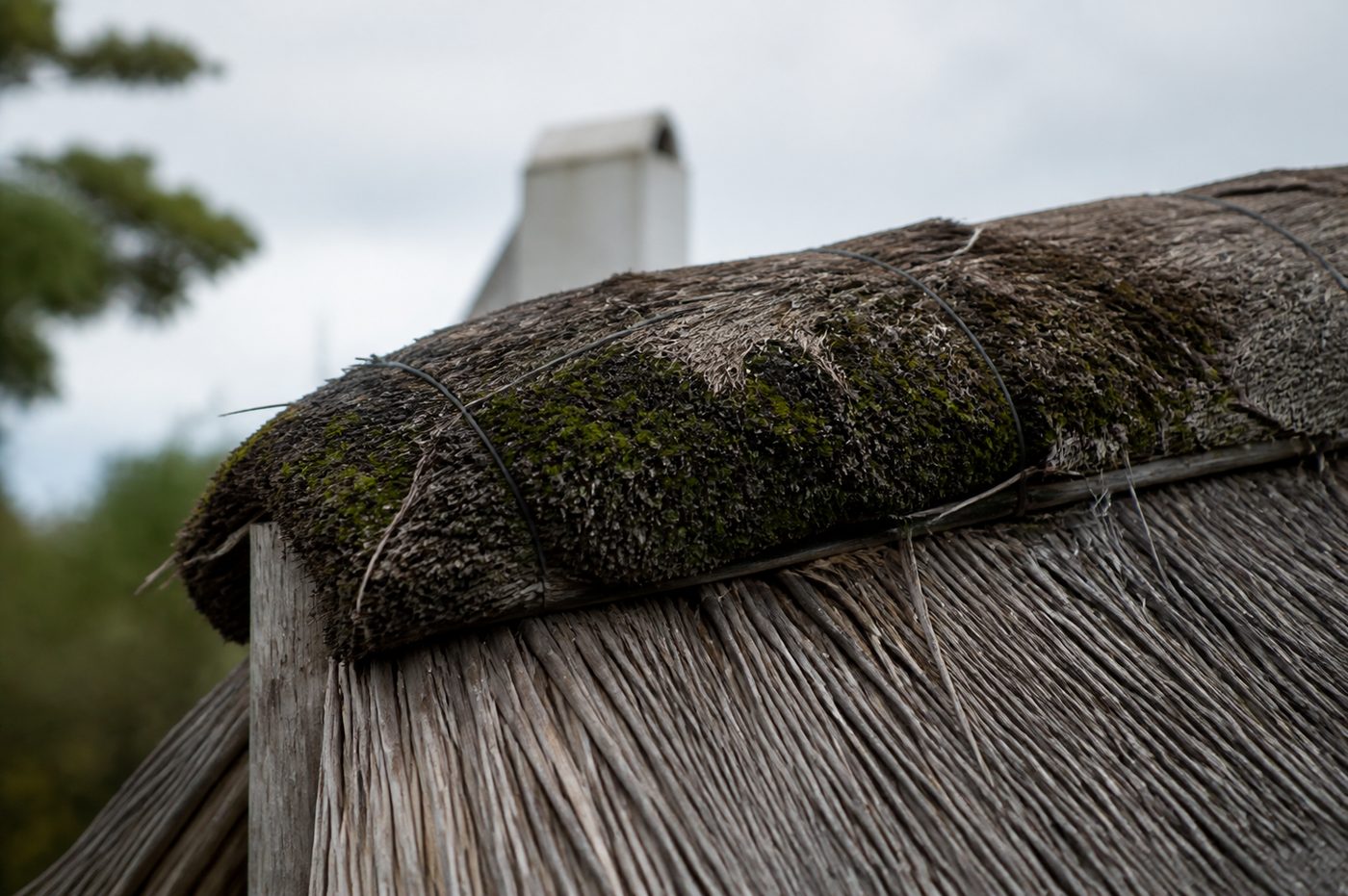
Cleaning a thatch roof is one of the few maintenance jobs where doing it wrong is far worse than not doing it at all. A pressure washer will destroy a thatch roof in twenty minutes. A skilled brushing will add years to it. The gap between those two outcomes is the whole subject.
Cleaning a thatch roof: what actually needs cleaning
Three things grow on or collect in Cape Town thatch: moss, algae and organic debris from overhanging trees. All three matter for the same reason, which is that they hold water against the thatch and stop it drying between rains.
Moss is the serious one. It grows on the shaded slope, usually the south side in Cape Town, and it forms a mat that stays damp for days after the weather clears. Thatch under a moss mat rots from the outside in. When we see heavy moss on a roof, we are usually also going to find soft thatch underneath it.
Algae is the green or black surface staining. It is mostly cosmetic in the early stages but it signals that the slope is staying damp, which is worth understanding before it becomes moss.
The safe method: brushing
Thatch is cleaned by brushing, done by hand, working downslope with the lie of the stems. A thatcher uses a stiff brush or a thatching rake and pulls debris, moss and the loose weathered surface material off the roof.
Brushing does two jobs at once. It removes the growth, and it takes off the top layer of degraded material to expose sound thatch underneath. Done properly on a sound roof it genuinely extends the life of the thatch.
It has to go downslope. Brushing up the roof lifts the stems out of alignment and breaks the water path, which creates leaks. This is a large part of why it is not a DIY job.
What destroys a thatch roof
Pressure washing. Never. High pressure water blasts stems loose, drives water deep into the body of the thatch, and strips out the compaction that makes the roof shed rain. We have seen a single pressure wash take a decade off a roof.
Chemical moss killers and bleach. Most are formulated for tiles and masonry. They soak into thatch, do not rinse out, and can degrade the material. Some also kill the plants below when they run off the eaves.
Walking on the roof. Foot traffic compresses thatch unevenly and breaks the water path. Cleaning is done from a ladder at the eaves and from a roof ladder that spreads load, by someone who knows where to put their weight.
Sealing after cleaning. A common upsell and a bad one. See why sealers backfire on thatch.
How often should thatch be cleaned?
For most Cape Town roofs, a proper brushing every three to five years is right, with a visual check twice a year. Roofs under trees or heavily shaded roofs need it more often. Exposed sunny roofs need it less.
Do not clean on a schedule for the sake of it. Every brushing removes some material. Over-cleaning a thin roof takes life off it. The decision should follow an inspection, not a calendar.
Dealing with the cause, not just the growth
Moss keeps coming back if the conditions that grew it stay the same. The real fixes are cutting back overhanging branches to let sun and wind onto the slope, clearing gutters and valleys so water is not backing up, and making sure the roof is not staying damp because of a drainage or pitch problem.
If the same slope regrows heavy moss within a year of cleaning, that is telling you something about the roof, not about the moss.
When cleaning is not the answer
If the thatch under the moss is soft, thin or spongy, brushing will not save it and may accelerate the failure by removing what little sound material is left. At that point you are looking at a repair or a re-thatch rather than a clean. The tests are in seven signs your thatch roof needs re-thatching.
Our year-round maintenance guide puts cleaning in context with the rest of the routine.
Cleaning versus brushing versus re-dressing
These three get used interchangeably and they are different jobs. Cleaning means removing growth and debris from the surface. Brushing means working the surface with a stiff brush or thatching rake to take off degraded material and expose sound thatch. Re-dressing means beating the butt ends back into compaction with a dressing tool, which restores density on a roof that has loosened.
Which one your roof needs depends on its condition, and that is decided by probing rather than by looking. A roof that needs re-dressing will not be fixed by cleaning, and a thin roof that gets aggressively brushed loses material it cannot spare. Our guides on how long a thatch roof lasts in Cape Town and thatch ridge replacement cover where each fits in the maintenance cycle.
Frequently asked questions
What is the best way to clean a thatched roof?
Hand brushing by a thatcher, working downslope with the lie of the stems. This removes moss and debris and takes off the degraded surface layer to expose sound thatch beneath.
Can you pressure wash a thatched roof?
No. High pressure water loosens stems, drives water into the body of the thatch and destroys the compaction that makes it shed rain. It can take years off a roof in a single session.
How do I get moss off my thatch roof?
Have it brushed off by hand, then remove the cause. Moss grows on shaded damp slopes, so cutting back overhanging branches to let in sun and wind is what stops it returning.
How often should a thatch roof be cleaned?
Most Cape Town roofs need a proper brushing every three to five years, with visual checks twice a year. Shaded roofs and roofs under trees need it more often.
Want a straight answer on your own roof?
Free inspections across Cape Town and the Winelands. We’ll give you the number, the photos and the options: no pressure to book anything.