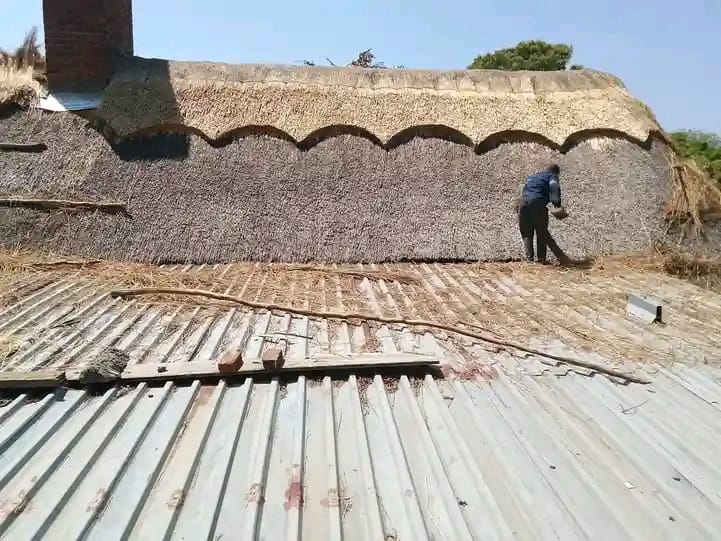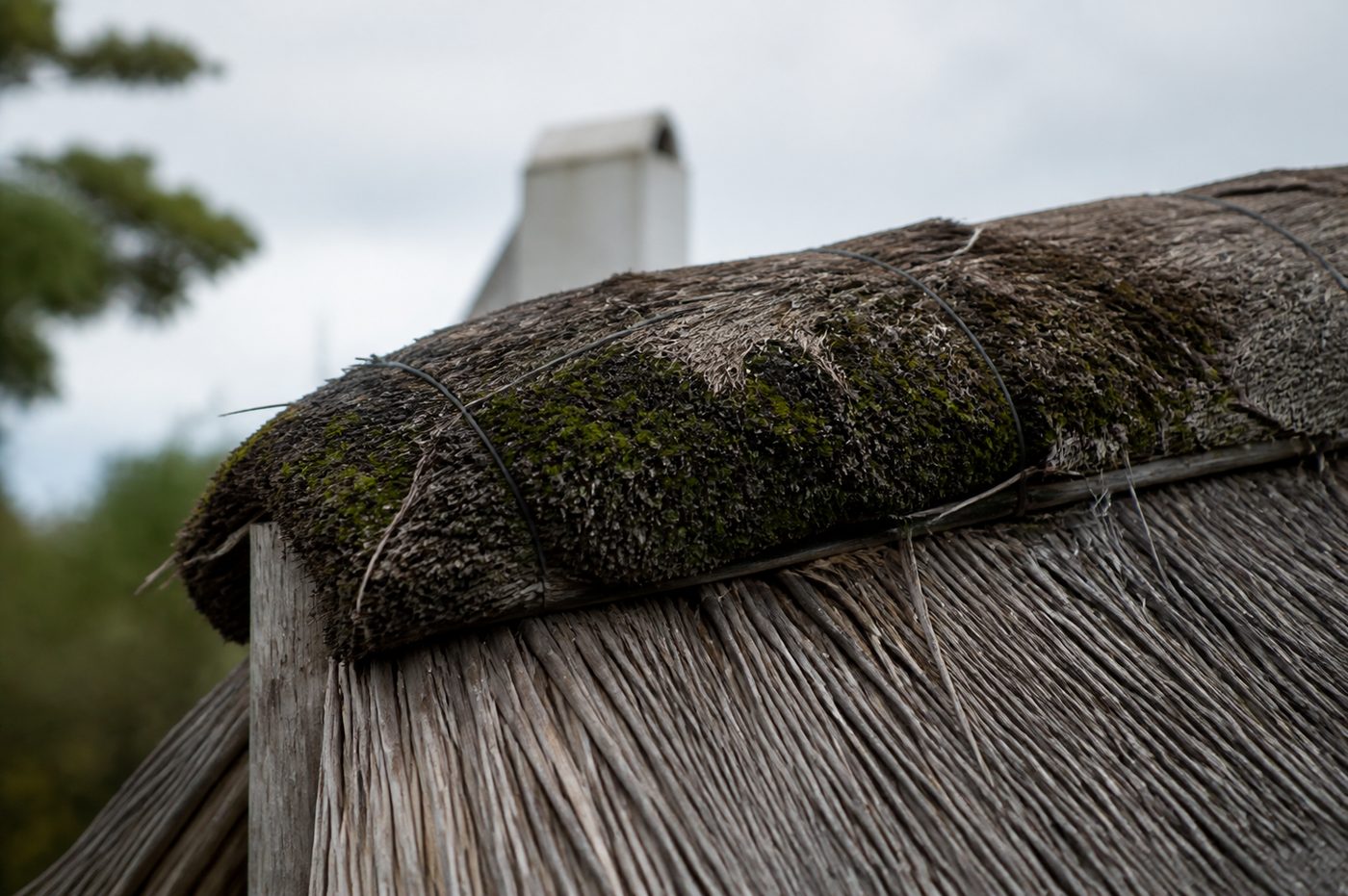
Thatch ridge replacement is the most cost-effective maintenance job on a thatch roof, and the one most often left too late. The ridge protects the apex where there is no upslope thatch above it. When it fails, water enters the top of the roof and runs down inside the thatch, damaging material that was otherwise fine.
Why thatch ridge replacement comes round first
Every part of a thatch roof except the ridge is protected by the courses above it. The ridge has nothing above it. It takes direct rain, direct sun, and the full force of wind at the highest point of the building.
So a ridge simply does not last as long as the thatch beneath it. On a Cape Town roof you should expect to replace the ridge several times over the life of the main thatch. That is normal, not a sign of poor work.
The signs yours needs attention
Visible thinning along the apex. The ridge line looks lower, flatter or ragged compared with when it was new.
Exposed fixings. Wire or netting showing through at the ridge means material has worn away from around it.
Moss or growth concentrated on the ridge. Growth means the ridge is holding moisture rather than shedding it.
Damp patches high inside. A ridge fault typically shows as damp on the ceiling below the apex, or as staining that runs downslope from near the top. Remember thatch leaks appear downslope of the fault, so a stain part-way down a slope can still be a ridge problem. See thatch roof leaks.
Loose or displaced material. After a strong front, ridge material sometimes lifts. Any movement is worth inspecting.
Birds working the ridge. Birds target loose material, and the ridge is the easiest place to find it. See thatch roof pests.
What replacement involves
The old ridge material is removed down to sound thatch at the apex. The top courses on both slopes are checked, because a ridge that has been leaking often means the thatch immediately below it is soft too. Any soft material is cut back.
The new ridge is then formed and fixed, dressed to shed water off both slopes cleanly, and finished. On some roofs a wire netting is fitted over the ridge to protect against birds.
It is a fast job compared with re-thatching. Most residential ridges are a matter of days, not weeks, and the roof is not opened up in the way a full re-thatch requires.
What it costs
Ridge work is priced by the running metre of ridge rather than by roof area, and it is a fraction of a re-thatch. For context, full re-thatching generally runs R200 to R400 per square metre across South Africa, so a whole roof is a substantial number while a ridge is a maintenance-scale one.
The economics are why we push it. A ridge replaced on time protects thirty years of thatch. A ridge left for three years after it failed can mean re-thatching the top third of the roof, and in bad cases the timber below it. That is the difference between a maintenance bill and a capital one.
Timing it
Get the ridge inspected as part of a twice-yearly check, and plan replacement work for the dry months. In Cape Town that means doing it between roughly October and April rather than discovering the problem in June.
If a ridge is marginal going into winter, it is usually better to deal with it before the rain than to gamble on one more season. Our year-round maintenance guide sets out the schedule.
Ridge replacement or re-thatch?
The deciding question is the condition of the thatch below the ridge. If the main roof is sound with thickness and density still there, replace the ridge and you have bought years. If the body of the thatch is thin across the slopes, a new ridge on a worn roof is money spent on the wrong thing.
We probe the thatch on both slopes before recommending either. Our guide to seven signs your thatch roof needs re-thatching covers the tests, and the re-thatching process explains the bigger job.
Ridge materials and detailing
Ridges can be formed in the same material as the roof or in a complementary one, and the choice affects both appearance and how long the ridge lasts. What matters more is the detailing: the ridge has to shed water cleanly onto both slopes without a break in the surface, and it has to be fixed securely enough to resist wind uplift at the highest point of the building.
Wire netting over the ridge is common and worthwhile where birds are active, since the ridge is the easiest place for them to pull material loose. It has to be tensioned properly rather than draped, or it chafes the thatch it is protecting. Our guides on thatch roof pests and thatch roof storm damage cover both pressures the ridge faces.
Frequently asked questions
How often does a thatch ridge need replacing?
Several times over the life of the main thatch. The ridge has no thatch above it protecting it, so it takes direct weather and wears out well before the slopes do.
What are the signs a thatch ridge needs replacing?
Visible thinning or a ragged ridge line, exposed fixing wire, moss concentrated along the apex, damp high on the ceiling inside, loose material after storms, and birds working the ridge.
Is ridge replacement cheaper than re-thatching?
Considerably. Ridge work is priced per running metre and is a maintenance-scale job of a few days, whereas re-thatching runs R200 to R400 per square metre across the whole roof.
Can I just replace the ridge instead of re-thatching?
Only if the thatch below is still sound in thickness and density. A new ridge on a thin worn roof is money spent on the wrong part. The thatch should be probed on both slopes first.
Want a straight answer on your own roof?
Free inspections across Cape Town and the Winelands. We’ll give you the number, the photos and the options: no pressure to book anything.