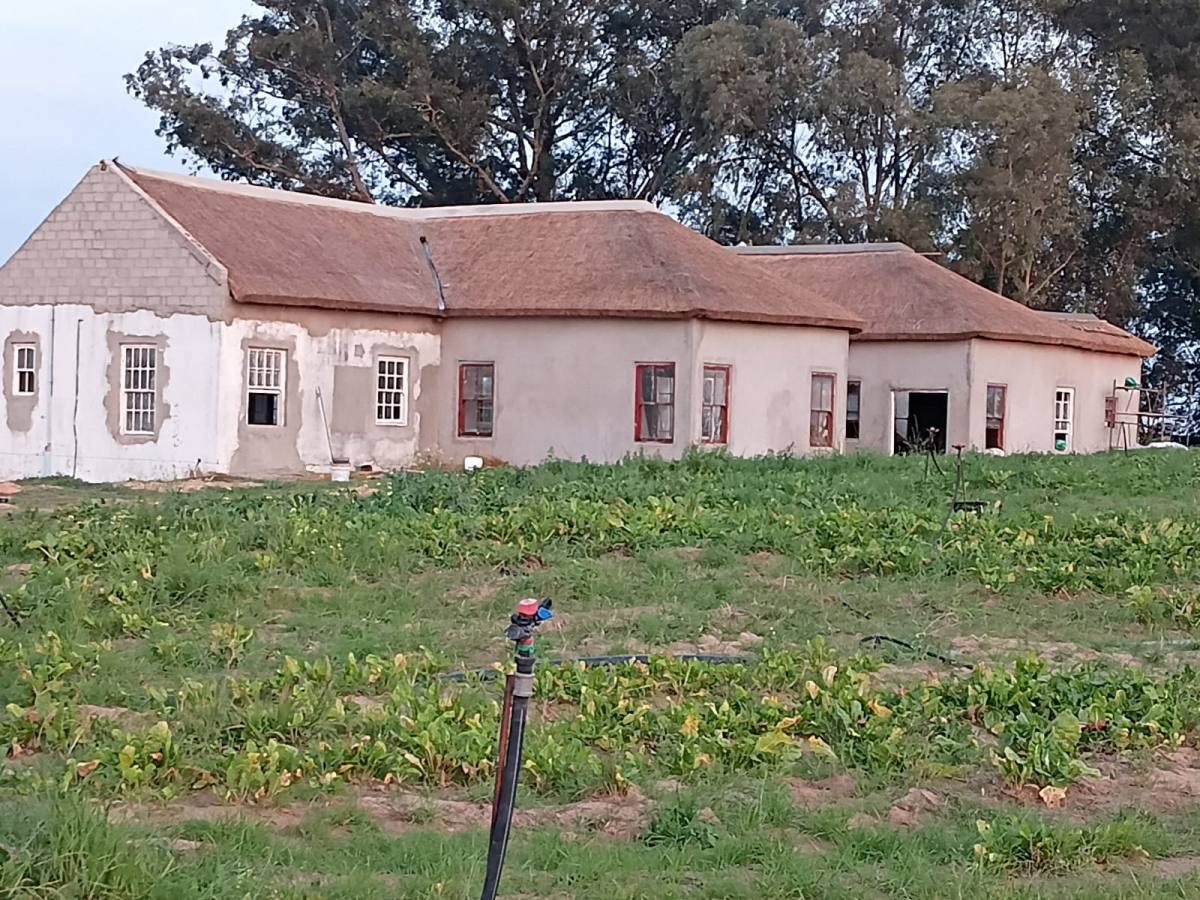
Thatch roof storm damage in Cape Town is rarely the storm fault alone. A sound, well-maintained thatch roof handles winter fronts and south easter gales without difficulty. What storms mostly do is expose weaknesses that were already there, which is good news, because it means most storm damage is preventable in autumn.
What thatch roof storm damage actually looks like
Ridge damage. The highest, most exposed part of the roof takes the worst of the wind. Loose or worn ridge material lifts, and once a section is displaced the top of the roof is open. This is the most common storm failure we attend.
Wind-driven rain. Rain hitting a slope horizontally rather than falling on it defeats the normal shedding path, particularly where thatch has thinned. It finds gaps that vertical rain never would.
Debris impact. Branches coming down onto thatch cause localised damage that breaks the water path and needs repair before the next front.
Uplift at eaves and gables. Wind getting under an eave or around an exposed gable end can pull material loose, especially where fixings have corroded.
Water ingress at existing weak points. Valleys, chimneys and any penetration. Storms find these first. See thatch roof leaks.
The autumn checklist
Do this in March or April, before the Cape winter, not in June.
Inspect the ridge. The single highest-value check. If it is thin, ragged or showing fixings, deal with it before the rain. See thatch ridge replacement.
Cut back overhanging branches. This removes both the debris risk and the shade that grows moss. Do it properly, not a token trim.
Clear moss and debris. Anything holding water against the thatch through winter causes rot. See cleaning a thatch roof.
Check valleys and junctions. Clear any build-up, and look for signs of previous water tracking.
Check penetrations. Chimneys, vents, skylights and satellite brackets. Anything fitted after the roof was built deserves a look.
Check gutters and ground drainage. Water backing up at eaves level saturates the bottom courses.
Look at the lightning conductor. Winter storms bring lightning, and this is the ignition risk that matters most on thatch. See lightning protection for thatch roofs.
What to do after a storm
Check from the ground first, walking the full perimeter and looking at the ridge line, the eaves and the slopes for displaced material or debris. Inside, check the ceiling and the roof space with a torch, especially near the apex.
Do not climb onto the roof. Wet thatch is slippery, storm-damaged thatch is structurally unpredictable, and walking on it compounds the damage. Photograph what you can see from the ground and from windows.
If material is displaced or you find water inside, get it covered and inspected before the next front. Open thatch deteriorates quickly once water starts reaching the body of the material.
Insurance and storm damage
Storm damage is typically an insured event, unlike gradual wear. That distinction matters: a ridge that blew off in a gale is usually claimable, while a roof that slowly thinned and started leaking is usually not.
Photograph the damage before any temporary repair, keep dated records, and get a written assessment. A recent inspection report showing the roof was maintained strengthens a claim considerably, because insurers look for neglect as grounds to decline. See thatch roof insurance in South Africa.
Emergency measures
If the roof is open and rain is coming, a properly weighted tarpaulin over the affected area is a reasonable temporary measure, fixed so it cannot flap and chafe the surrounding thatch. It is a stopgap for days, not weeks: a sheet left over thatch traps moisture and creates rot.
Do not attempt structural repairs yourself, and do not fill gaps with cement or sealant. Both trap water and turn a repairable fault into a bigger job.
The pattern worth noticing
If your roof takes damage in every serious storm, the storms are not the problem. Repeated storm damage points at thin thatch, corroded fixings, a chronically weak ridge or an exposure problem, and the answer is addressing the underlying condition rather than repairing the same failure annually. Our maintenance guide covers the routine that prevents it.
The south easter, not just the rain
Cape Town owners tend to prepare for winter rain and forget the summer wind. The south easter puts sustained mechanical load on a thatch roof, works at any loose material, and finds weak fixings at eaves and gable ends.
Wind damage is often less obvious than rain damage because nothing leaks immediately. Material gets worked loose, the surface opens slightly, and the consequence arrives with the first winter front months later. A post-summer check is as worthwhile as a pre-winter one.
Building the checks into a routine
Two inspections a year, one before winter and one after the windy season, catch nearly everything while it is still cheap. Add the ridge check, the tree cutback and the lightning conductor test to the same visits and the whole thing becomes one predictable annual task rather than a series of emergencies. Our guides on how long a thatch roof lasts in Cape Town and the year-round maintenance guide set out the full routine.
Frequently asked questions
How do I prepare a thatch roof for winter storms?
Inspect and repair the ridge, cut back overhanging branches, clear moss and debris, check valleys and penetrations, clear gutters, and check the lightning conductor. Do it in March or April, not once winter arrives.
What storm damage is common on thatch roofs?
Ridge material lifting is the most common, followed by wind-driven rain penetrating thinned slopes, branch impact damage, and uplift at eaves and gables where fixings have corroded.
Does insurance cover thatch storm damage?
Storm damage is usually an insured event, unlike gradual wear and thinning. Photograph the damage before temporary repairs and keep dated records, as a recent maintenance report strengthens a claim.
What should I do immediately after storm damage to thatch?
Inspect from the ground and from inside with a torch, photograph everything, and get it covered and professionally inspected before the next front. Do not climb onto wet or damaged thatch.
Want a straight answer on your own roof?
Free inspections across Cape Town and the Winelands. We’ll give you the number, the photos and the options: no pressure to book anything.