Commercial thatching is a different job from residential thatching, and not mainly because the roofs are bigger. The difference is that the building has to keep trading, the compliance bar is higher, and a failure costs revenue rather than comfort.
Where commercial thatch is used
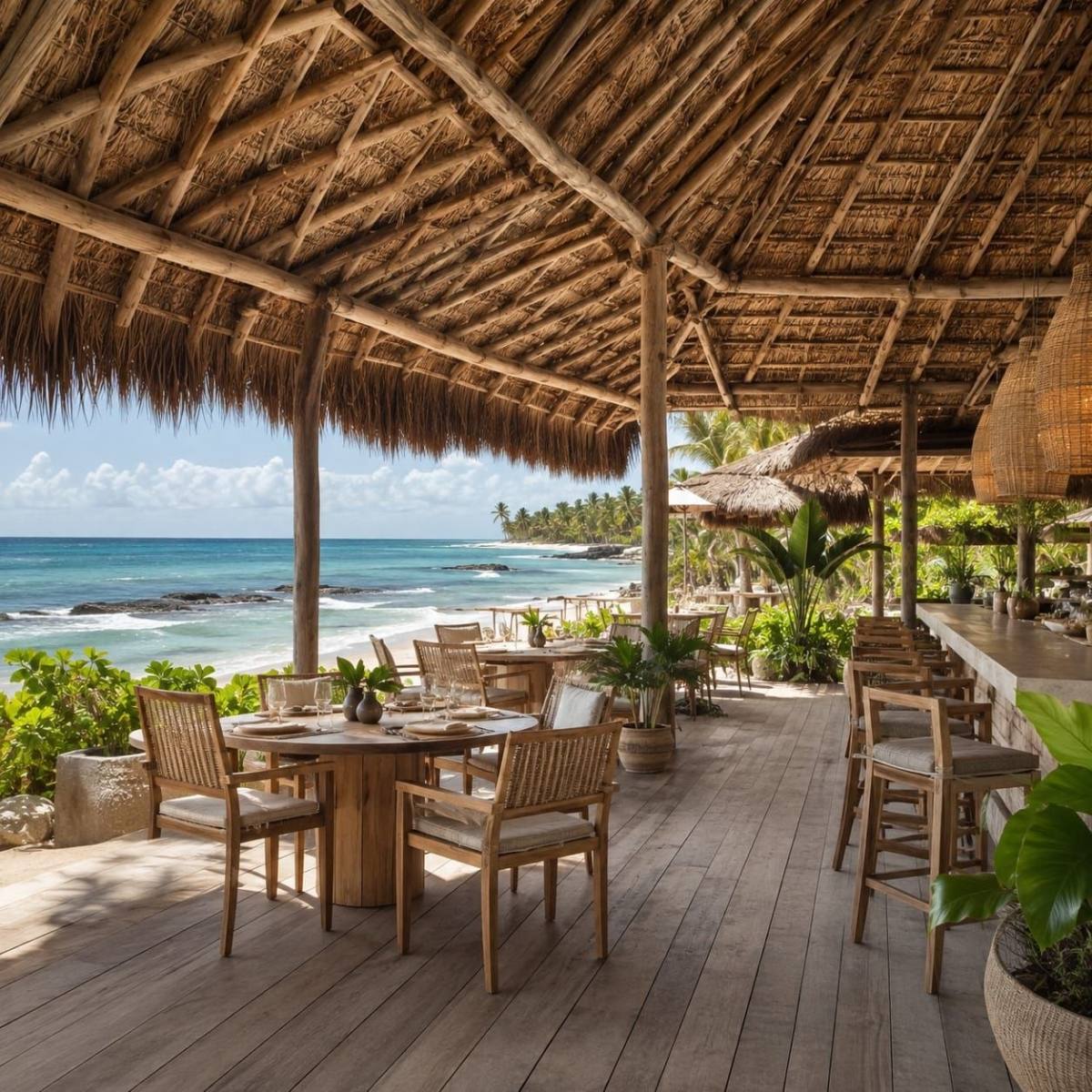
Lodges and guest houses, restaurants and wine estates, function venues, beach clubs, school and community halls, and hospitality structures like poolside bars and boma areas. In the Western Cape, wine estate hospitality buildings are a large part of the work.
The appeal is consistent: thatch gives a sense of place that steel and polycarbonate cannot, and it stays comfortable in summer heat without air conditioning. That thermal performance is a real operating saving on a large covered area. See thatch roof insulation.
Compliance is stricter and it matters more
All thatch in South Africa should be built to SANS 10407, with SANS 10400-T covering fire protection in buildings. On a commercial building with public occupancy, the fire requirements, escape provisions and the relationship to neighbouring structures are scrutinised in a way a private house is not.
Expect the local authority, your insurer and often your operating licence to all take an interest. Fire-retardant treatment is effectively mandatory and needs to stay current, not just be done once at handover. Lightning protection is not optional on a large exposed thatch roof.
Our guides on thatch fire safety and compliance and lightning protection cover the technical side, and thatch roof insurance covers what underwriters want.
Working around a trading business
This is the part that separates contractors. A restaurant cannot close for five weeks, and a lodge cannot take an entire wing offline in season.
The practical answer is phasing: sectioning the roof so work proceeds over one area at a time, sheeting and sealing the interior below each section, scheduling noisy stripping outside service hours where possible, and planning around the venue calendar rather than the contractor.
It also means agreeing in advance what happens if weather delays a phase while a section is open. On a house that is an inconvenience. On a venue with bookings it is a contractual matter.
Scale changes the technical picture
Large thatch roofs carry loads that residential roofs do not, and long spans need engineered structures rather than rule-of-thumb pole framing. On anything substantial, a structural engineer should sign off the frame.
Big roofs also collect more water at valleys and junctions, so drainage detailing matters more. And a large thatch area with an open interior below needs deliberate ventilation planning. See thatch roof ventilation.
Maintenance contracts, not call-outs
The most cost-effective commercial arrangement is a scheduled maintenance agreement rather than reactive repairs. On a large roof, a twice-yearly inspection with ridge attention and brushing as needed will substantially extend the life of the thatch and avoid the emergency closure that a serious leak causes over a busy weekend.
It also keeps the compliance paperwork current, which matters when an insurer or inspector asks. Our maintenance guide sets out what a routine looks like.
Cost drivers on commercial work
Thatch is priced per square metre of roof surface, generally R450 to R1 000 for new work and R200 to R400 for re-thatching. On commercial jobs, add scaffolding on large or high roofs, engineered structure where spans require it, phasing and out-of-hours work, and compliance items like treatment and lightning protection.
Roof area on a large venue is often much greater than owners expect, because steep pitch multiplies floor area substantially. Our guide on measuring a thatch roof explains the calculation.
What to ask a commercial thatching contractor
Ask for comparable completed projects you can visit. Ask how they phase around trading. Ask who signs off the structure. Ask what the maintenance schedule looks like after handover, and what the treatment reapplication cycle is. And ask for the compliance documentation you will need to hand your insurer.
Planning the programme around your season
The single biggest cost saving on commercial thatch work is doing it at the right time of year. In the Western Cape that usually means working in the dry months and outside peak season, which for wine estates and restaurants often means late summer into autumn.
Winter work is slower because of rain days, and rain days on an open commercial roof are expensive in a way they are not on a house. Booking early enough to get a dry-season slot is worth real money.
Documentation to keep on file
Commercial operators should hold the SANS compliance documentation, the fire-retardant treatment certificates with reapplication dates, the lightning protection installation and earthing certificates, the structural engineer sign-off, and dated inspection reports. Licensing authorities and insurers ask for these, usually at the least convenient moment. Our guides on thatch roof insurance and thatch roof leaks cover the compliance and technical detail.
Frequently asked questions
What is different about commercial thatching?
Stricter fire and compliance requirements under SANS 10407 and 10400-T, engineered structures for larger spans, phasing so the business keeps trading, and ongoing maintenance agreements rather than reactive repairs.
Can a restaurant stay open during thatching work?
Usually yes, with phasing. The roof is worked in sections with the interior sheeted below each one, and noisy stripping is scheduled around service hours.
Does a commercial thatch roof need an engineer?
On anything with substantial spans, yes. Large thatch roofs carry loads that rule-of-thumb pole framing does not cover, and a structural engineer should sign off the frame.
How often should a commercial thatch roof be maintained?
A twice-yearly inspection with ridge attention and brushing as needed is the practical standard. It extends thatch life considerably and keeps compliance paperwork current for insurers.
Want a straight answer on your own roof?
Free inspections across Cape Town and the Winelands. We’ll give you the number, the photos and the options: no pressure to book anything.