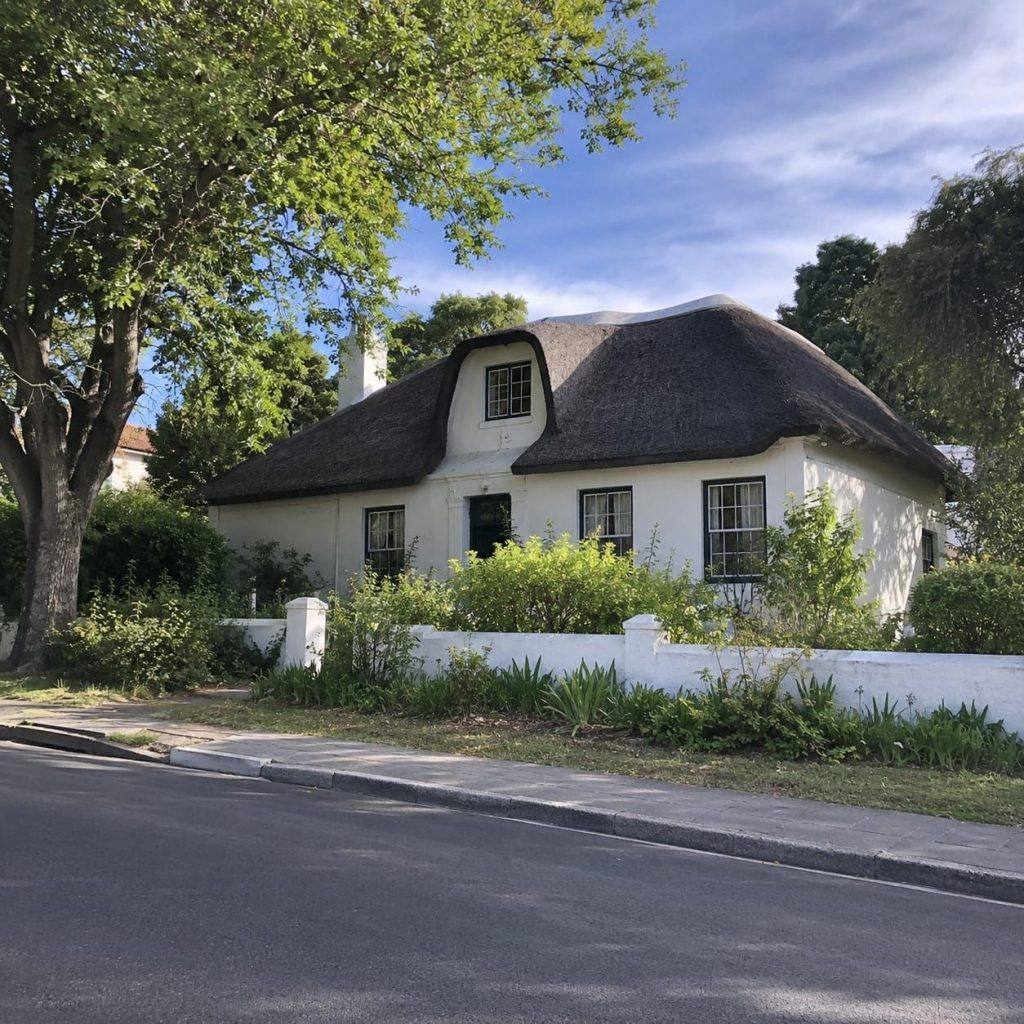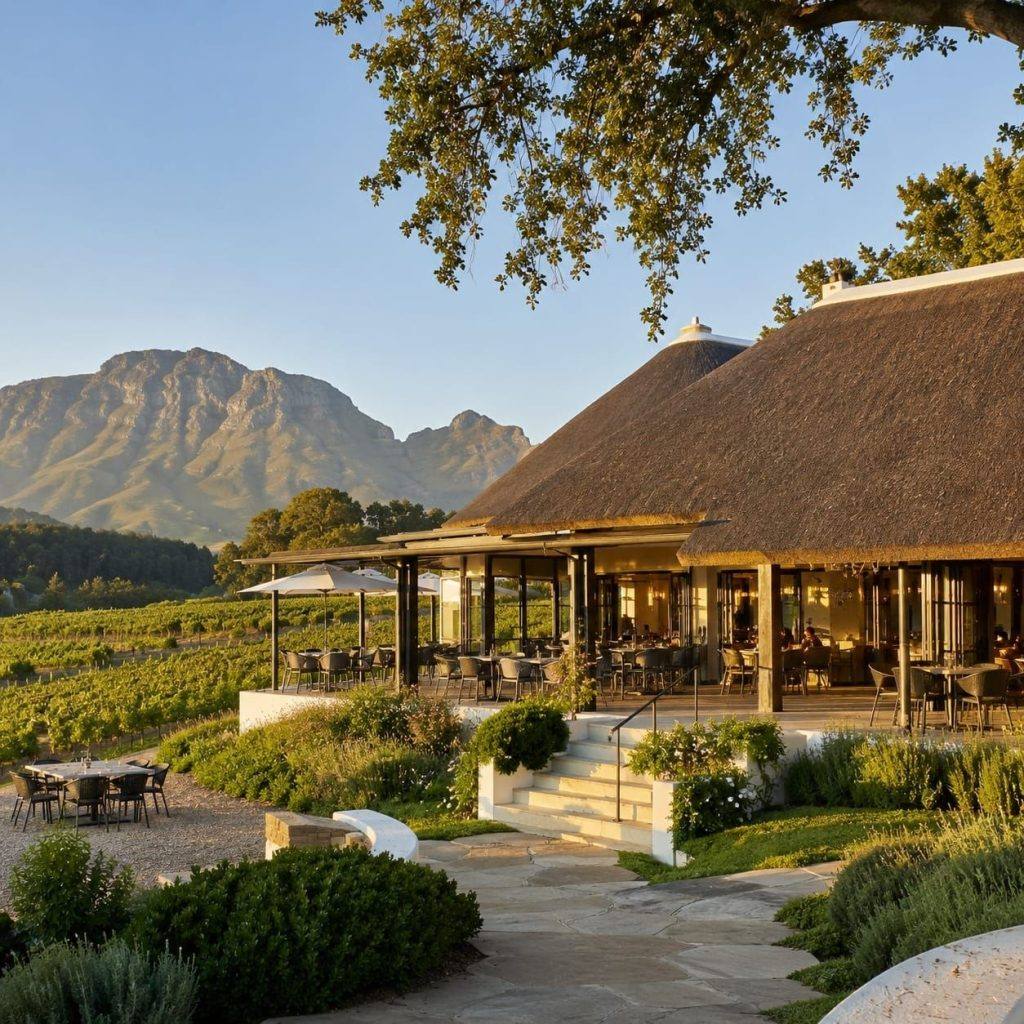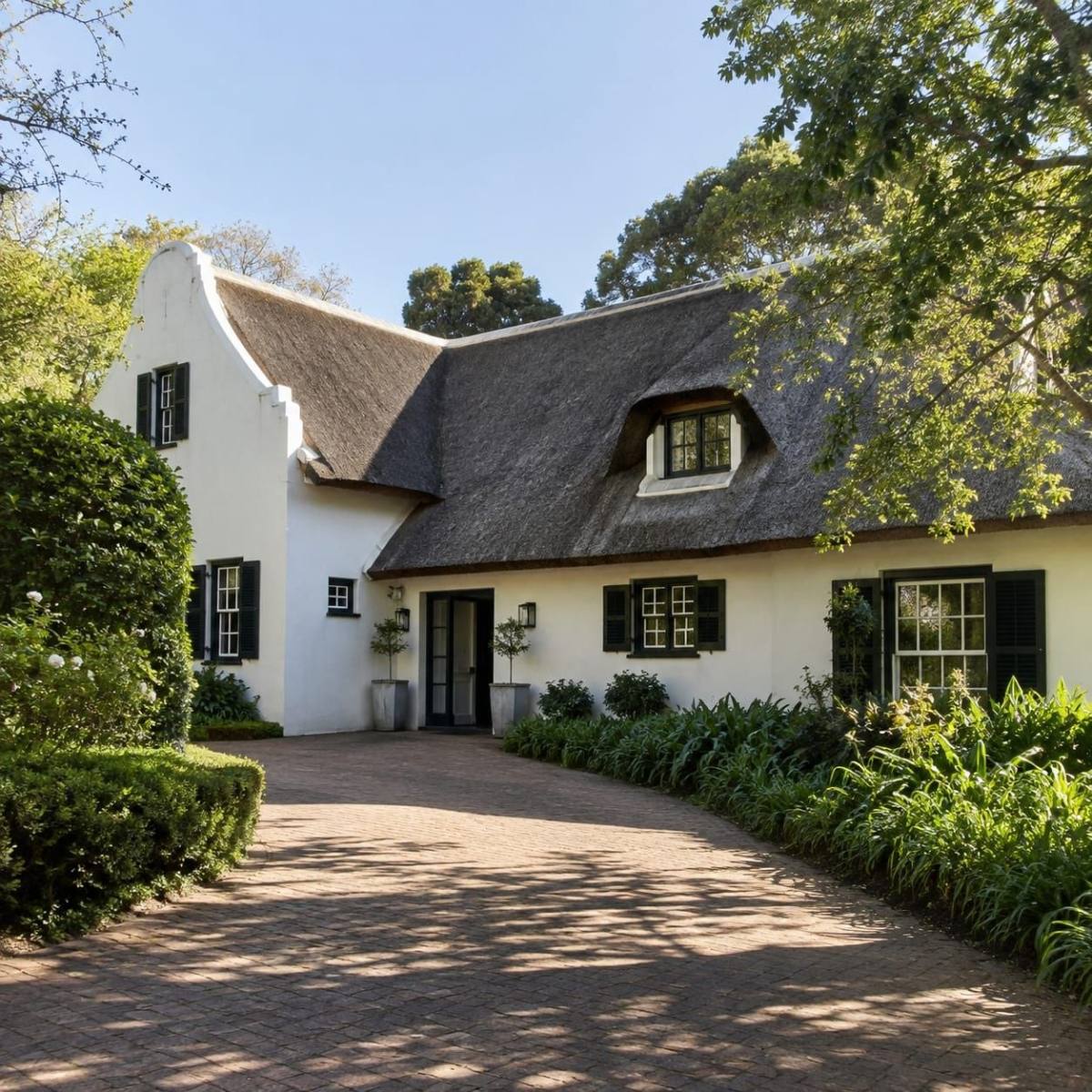
With load shedding driving solar adoption across South Africa, solar panels on thatch roofs is now one of the most common questions we get. The honest answer is that mounting PV directly on thatch is a bad idea, and that there are usually better places to put it on the same property.
Solar panels on thatch roofs: why direct mounting fails
Fire risk. PV systems carry DC wiring at meaningful voltage, and DC arc faults are a known ignition source. Putting that wiring in contact with, or buried in, a combustible roof covering is exactly the combination you do not want. On a tiled roof an arc fault has a fighting chance of going nowhere. On thatch it does not.
Fixing and structure. Panels need rigid, load-bearing fixings tied into the structure. Thatch is a thick soft covering over a frame that was designed to carry thatch, not point loads and wind uplift from panel arrays. Every mounting point has to pass through the thatch to reach timber, and every penetration breaks the water-shedding path.
Ventilation and heat. Panels sit close to the surface and trap heat and moisture against the thatch beneath them. Thatch needs to dry after rain. Covered thatch does not dry properly and rots. See how thatch sheds rain.
Maintenance access. Thatch needs brushing, ridge work and periodic re-thatching. An array bolted over a slope makes all of that harder, and re-thatching under panels means removing and reinstalling the entire system.
What your insurer will say
Ask before you install, not after. Many South African insurers already impose conditions on thatched dwellings around lightning protection and fire treatment, and adding a PV array to the thatch itself is likely to be treated as a material change to the risk.
An installation that voids your cover is worse than no installation. Get the position in writing. See thatch roof insurance in South Africa.
The alternatives that work
Ground-mounted arrays. The best answer on most properties with space. No roof penetrations, no fire risk to the dwelling, easy cleaning and maintenance, and you can orient and tilt panels optimally rather than accepting whatever the roof gives you. On a plot with garden space this is usually cheaper overall too.
Outbuildings and garages. If the garage, workshop or staff accommodation has a conventional metal or tiled roof, that is the place. Cabling to the main distribution board is a straightforward job.
Carports and pergolas. A purpose-built structure designed to carry panels solves the structural question and gives shaded parking. Increasingly popular and often the neatest solution on a thatched property.
A non-thatched roof section. Many thatched homes have a tiled or sheeted section over an extension, garage or service area. Even a modest area can host a useful array.
If there really is no alternative
Occasionally a property has thatch and nothing else. In that case the approach is a structure that is independent of the thatch rather than fixed through it, designed by an engineer, with the DC wiring routed outside the thatch entirely and never through it.
This is specialist work and it costs more than a standard installation. Anyone quoting a routine roof-mount price for a thatch roof has not thought about it.
Solar geysers and water heating
The same logic applies, with added weight. A filled solar geyser on a roof is a substantial point load, and thatch structures are not designed for it. Ground-mounted or outbuilding installations, or a heat pump instead, avoid the problem entirely.
What about during a re-thatch?
If you are planning both, do them in the right order. Re-thatch first, then install solar somewhere off the thatch. Installing solar shortly before a re-thatch means paying to remove and refit it.
A re-thatch is also the moment to run any cabling or provision you might need later, since the roof is open. Mention it at quoting stage. Our guide to the re-thatching process explains what else can be dealt with while the thatch is off.
The short version
Solar and thatch are both good ideas. They are just bad ideas in the same place. Put the panels on the ground, the garage or a purpose-built carport, keep the thatch clear and breathing, and you get both without compromising either.
Batteries, inverters and where they go
The panels get the attention, but the inverter and battery are the components that generate heat and, occasionally, fire. Neither belongs in a thatched roof space or against a thatched structure.
Mount them in a garage, a plant room, or a purpose-built enclosure with proper ventilation and clearance, on a non-combustible wall. This is standard good practice on any house and it matters more on a thatched one. Discuss the location with your installer at quoting stage, because retrofitting a better position later is disruptive.
Talk to your thatcher and your installer together
Most problems we see come from the two trades never speaking. The solar installer treats the roof as a mounting surface, and the thatcher finds out afterwards. A short conversation before installation avoids penetrations in the wrong places, cabling routed through thatch, and equipment sited where it blocks future roof maintenance. Our guide to the year-round maintenance guide covers the other renovations worth planning around the roof.
Frequently asked questions
Can you put solar panels on a thatch roof?
It is strongly inadvisable. DC wiring on a combustible covering is a fire risk, mountings must penetrate the thatch and break the water path, and panels trap moisture against thatch that needs to dry.
Where should solar go on a thatched property?
Ground-mounted arrays are usually best, followed by outbuildings or garages with conventional roofs, purpose-built carports, or any non-thatched roof section such as an extension.
Will solar panels affect my thatch roof insurance?
Very likely. Insurers already impose conditions on thatched dwellings, and mounting PV on the thatch itself is generally treated as a material change to the risk. Get the position in writing first.
Should I install solar before or after re-thatching?
Re-thatch first, then install solar off the thatch. Installing beforehand means paying to remove and refit the system when the roof is done.
Want a straight answer on your own roof?
Free inspections across Cape Town and the Winelands. We’ll give you the number, the photos and the options: no pressure to book anything.