Thatching materials in South Africa come down to a handful of real options, and the marketing around them is thicker than the roofs. This is what each one actually is, how long it lasts, and where it belongs.
Thatching materials: Cape reed
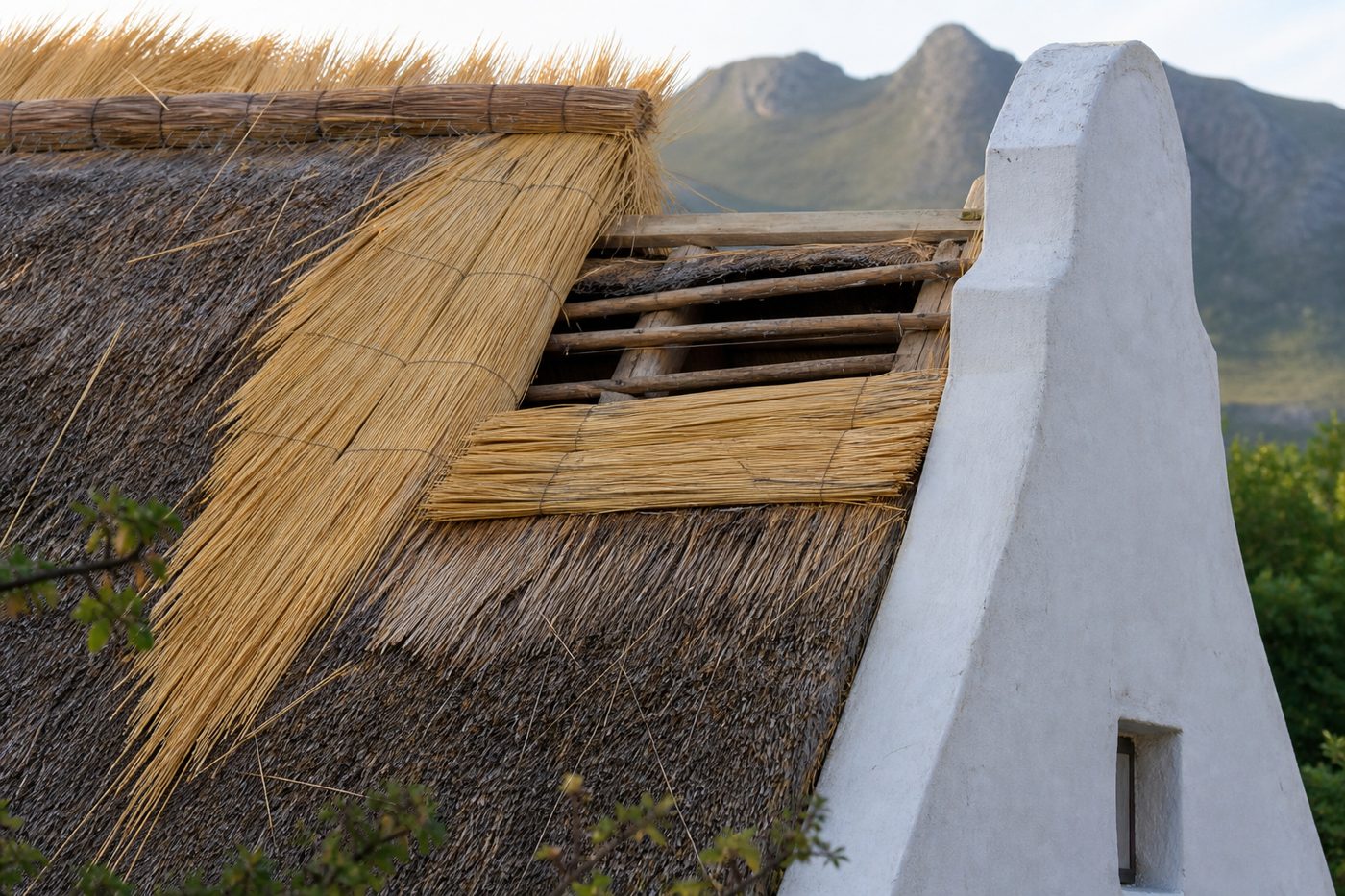
A hollow-stemmed water reed harvested from Western Cape wetlands. It is the standard material for Cape Town and Winelands roofs and the one we use on most jobs here.
Cape reed packs tightly because the stems are uniform, which gives a dense roof that sheds water well. The hollow stem does not hold moisture the way a solid stem does, so it copes with wet winters. It is harder to ignite than grass, and it is close to dust-free as a ceiling layer.
Lifespan on a well-built roof at correct pitch is commonly thirty to forty years. The underside looks clean and linear, which suits both Cape Dutch and modern interiors.
Thatching grass
Solid-stemmed grass, grown mainly in Limpopo, Mpumalanga and KwaZulu-Natal. The default material for Highveld and bushveld roofs.
Grass gives a softer, more textured ceiling. It suits lodges, farm buildings and anywhere the rustic look is the point. It is generally cheaper in the north where it is grown, and more expensive in the Cape once transport is added.
Lifespan typically runs shorter than reed in wet conditions, often twenty to thirty years, because the solid stem retains moisture. In dry inland climates the gap narrows considerably. Our comparison of Cape reed vs thatching grass goes into the trade-offs.
Bulrush
Used less often and usually for specific aesthetic reasons or in particular regions. It sits between reed and grass in character. It is not a common choice for Cape Town residential work and we would only recommend it where the look is specifically wanted.
Synthetic thatch
Moulded plastic panels made to look like thatch. Genuinely useful in some settings: commercial installations where fire regulations are severe, hospitality venues that want zero maintenance, and places where real thatch is impractical.
Be clear about what it is. It does not insulate like thatch, it does not look like thatch close up, and it does not have thatch character from inside. It is a roofing product styled as thatch, and priced accordingly. For a home where the thatch is part of why you bought the house, it usually disappoints.
Thatch tiles, which are not thatch
Steel or metal tiles with a stone-chip finish shaped to suggest a thatch profile. These come up constantly in searches and they are a different product entirely: a conventional metal roof that references thatch visually.
They are a legitimate option if you want to leave thatch behind, and they solve the fire and maintenance questions. They are not a thatch repair or a thatch upgrade. Our guides on thatch tiles vs real thatch and converting thatch to tile cover the decision honestly.
The parts nobody quotes separately
Fixings. Galvanised wire or screws, depending on method and structure. This is not the place to save money. Corroded fixings fail long before the thatch does.
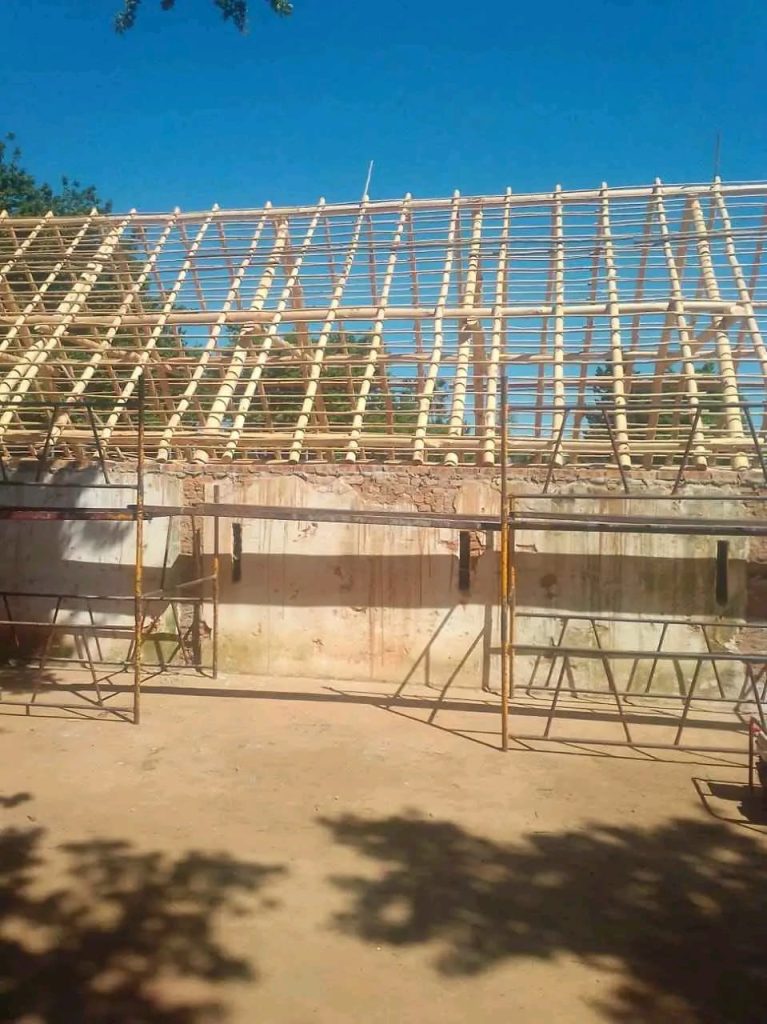
Battens and structure. Timber sized and spaced for the load. If your roof structure is being replaced or altered during a re-thatch, this is part of the material cost.
Ridge material. Ridges are formed from the same or a complementary material and are replaced more often than the main roof. See thatch ridge replacement.
Fire-retardant treatment. A chemical treatment applied after installation and reapplied on a cycle. Often required by insurers.
Grade matters as much as type
Two loads of Cape reed can differ substantially in quality. Stem length, uniformity, harvest season and how it was dried and stored all affect how the roof performs and how long it lasts.
This is where cheap quotes usually hide their savings. Ask what grade is quoted, ask to see a sample bundle rather than a photograph, and ask where and when it was harvested. A contractor who cannot answer is buying whatever was cheapest that week.
Our guide on choosing a thatching contractor in Cape Town covers the rest of the questions worth asking.
How to compare two quotes on material
Quotes rarely specify material properly, which makes them hard to compare. The questions that surface the difference are simple: what species and where was it harvested, what grade, what stem length, what thickness will be laid, and what are the fixings.
Two quotes that differ by thirty percent usually differ on grade and thickness rather than on profit margin. A thinner roof of lower grade material genuinely costs less to build and it genuinely lasts less time, so the cheaper quote is not always wrong, it is just buying a different roof. What matters is knowing which one you are buying. Our guides on measuring a thatch roof and how long a thatch roof lasts in Cape Town cover the arithmetic and the consequences.
Frequently asked questions
What materials are used for thatching in South Africa?
Mainly Cape reed, harvested in the Western Cape, and thatching grass grown in the northern provinces. Bulrush is used occasionally, and synthetic thatch panels exist for commercial settings.
Which thatching material lasts longest?
In wet coastal conditions Cape reed generally lasts longest, commonly thirty to forty years on a well-built roof. Thatching grass typically runs shorter in the same conditions but performs better in dry inland climates.
Are thatch tiles the same as thatch?
No. Thatch tiles are steel or metal roof tiles shaped to resemble a thatch profile. They are a conventional metal roof, not a thatch product, and they do not insulate like thatch.
Does the grade of thatching material matter?
Considerably. Stem length, uniformity, harvest season and storage all affect performance and lifespan. Cheap quotes often save money on grade, so ask to see a sample bundle.
Want a straight answer on your own roof?
Free inspections across Cape Town and the Winelands. We’ll give you the number, the photos and the options: no pressure to book anything.