We build thatch roofs for a living, so treat what follows accordingly. But we also strip a lot of thatch off houses whose owners wish they had known the downsides earlier, and a list of thatch roof pros and cons that only covers the pros is not useful to anyone.
Thatch roof pros and cons: the advantages
Thermal performance. This is the strongest practical argument. A 200mm thatch roof is a thick layer of trapped air, so it keeps summer heat out and winter warmth in far better than tiles. In Cape Town summers the difference can be several degrees, and a thatched patio is usable at midday when a steel-roofed one is not. See thatch roof insulation.
Character and interior volume. A steep thatch roof creates height and shape inside that a flat-ceilinged house does not have. The exposed underside of good reed is a genuine architectural feature, not just a covering.
Longevity when built right. Thirty to forty years is normal for a well-built Cape reed roof at the correct pitch. That is competitive with most roofing.
Local, natural material. Cape reed is harvested in the Western Cape, so a Cape Town thatch roof has a genuinely short supply chain and a low-processing material.
Acoustic quality. Thatch absorbs sound rather than reflecting it. Rain on thatch is quiet, which anyone who has slept under a steel roof will appreciate.
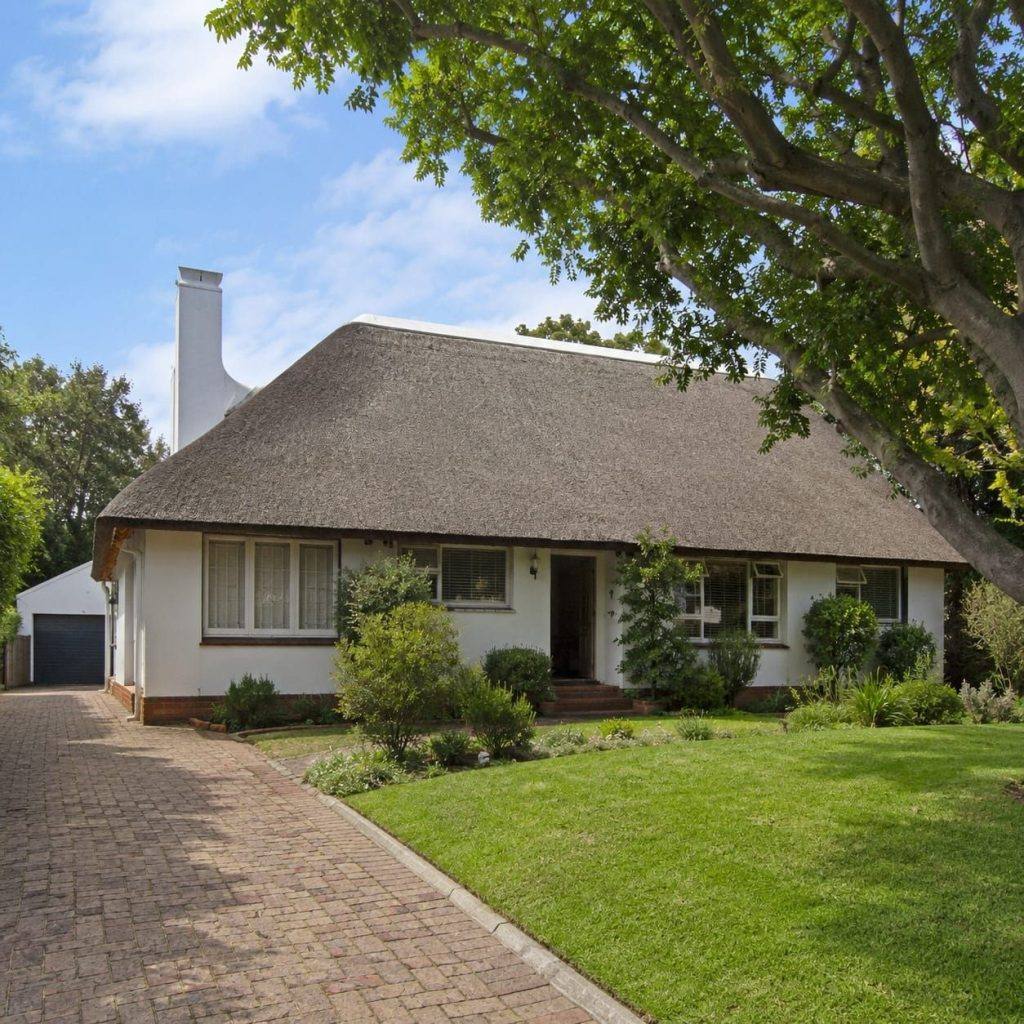
Property character. In the right setting, thatch adds appeal and value. On a Winelands or coastal property it is often part of why the house sells.
The disadvantages
Fire risk. The real one. Thatch burns, thatch fires spread fast, and they frequently result in total loss. Lightning is the leading ignition cause in South Africa. This is manageable with construction to SANS 10407, fire-retardant treatment and a lightning conductor, but it never goes away entirely. See thatch fire safety and compliance.
Insurance cost and conditions. Premiums are higher, and insurers impose conditions on lightning protection and treatment certificates. Some insurers simply will not write thatch. See thatch roof insurance.
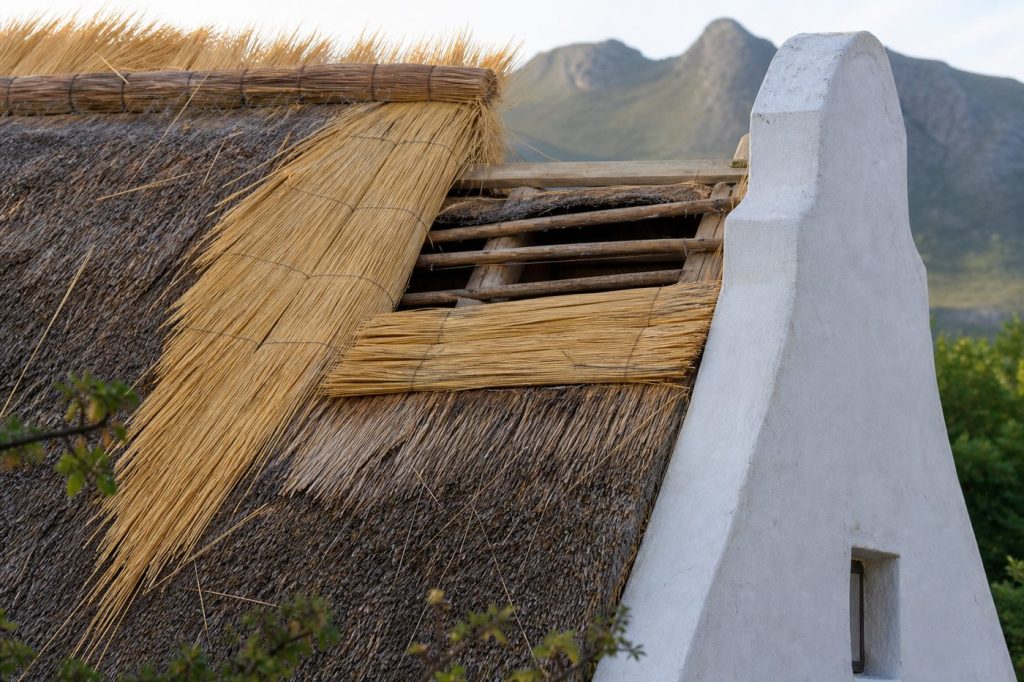
Ongoing maintenance. Thatch is not a fit-and-forget roof. Ridges need replacing several times over the roof life, moss needs clearing, and brushing every few years extends the material life. Budget for it. See the maintenance guide.
Design constraints. Around 45 degrees of pitch is required, which dictates the roof height and shape. You cannot have a low-pitched thatch roof that works. See thatch roof pitch.
Pests. Birds pull stems out for nesting and burrow to roost, particularly in spring. Manageable with targeted netting and dense thatch, but it is a recurring item. See thatch roof pests.
Solar is awkward. Mounting PV on thatch is inadvisable, so you need ground mounts, a carport or an outbuilding. Worth knowing before you plan an installation. See solar panels on thatch roofs.
Skill dependency. The quality of the crew matters enormously and is hard for an owner to judge. A badly built thatch roof fails in a decade and looks fine on handover day.
Cost, which is both
New thatch generally runs R450 to R1 000 per square metre of roof surface, and re-thatching R200 to R400. That is not cheap, and steep pitch means the roof area is substantially larger than the floor area beneath it.
Against that, the roof lasts decades and does the insulation work that would otherwise be a separate cost. Whether it is good value depends on how long you hold the property and how much you value the things thatch does well. Our 2026 price guide breaks it down.
Who thatch suits
Thatch works well for owners who want the look and interior quality, who are prepared to maintain the roof on a schedule, who can get sensible insurance, and whose site suits a steep roof.
It works badly for owners who want a low-maintenance roof, who are stretched on insurance, who need a low-pitched design, or who plan a large roof-mounted solar array.
If you are leaning away from thatch on an existing thatched house, the honest alternative is covered in converting a thatch roof to tile and thatch tiles vs real thatch. We would rather you make the right call than keep a roof you resent.
How the picture changes over time
The pros and cons weigh differently depending on how long you plan to stay. Over three to five years, the maintenance schedule and insurance premium dominate and the thirty-year lifespan is irrelevant to you. Over fifteen or twenty years, the lifespan and the thermal performance start to matter a great deal and the annual maintenance looks small against them.
The other thing that shifts is condition. A roof with twenty-five years left is a different proposition from one with five, and the same house can be either. That is why we recommend an inspection before buying rather than a general view about thatch. See thatch roof inspection before you buy and how long a thatch roof lasts in Cape Town.
Frequently asked questions
What are the main advantages of a thatch roof?
Excellent insulation in both summer and winter, genuine architectural character and interior volume, thirty to forty years of life when built correctly, a locally harvested natural material, and quiet acoustics.
What are the disadvantages of thatch roofs?
Fire risk, higher insurance premiums with conditions attached, ongoing maintenance including periodic ridge replacement, a required pitch of around 45 degrees, bird activity, and difficulty mounting solar panels.
Is a thatch roof worth it in South Africa?
It depends on your priorities. It is worth it if you value the thermal performance and character and will maintain it on schedule. It is not if you want a low-maintenance roof or plan a large rooftop solar array.
Is thatch more expensive than tile?
New thatch generally runs R450 to R1 000 per square metre of roof surface, and steep pitch means more roof area than floor area. It lasts decades and provides insulation that would otherwise cost extra.
Want a straight answer on your own roof?
Free inspections across Cape Town and the Winelands. We’ll give you the number, the photos and the options: no pressure to book anything.